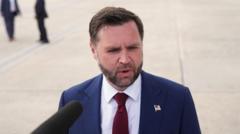
US and Iran 'Very Close' to Deal, But Sticking Points Remain, Vance Says
Vice President Vance stated the US and Iran are near a deal, but final approval from leaders is pending on key issues.
The United States and Iran are "very close" to reaching a deal to de-escalate tensions, but significant sticking points remain before an agreement can be finalized, according to U.S. Vice President JD Vance.
Speaking to reporters in Washington D.C. on Thursday evening, Vance indicated that while negotiators are actively working to resolve outstanding issues, it is "too early to say when or if the two sides would finalize an agreement." The remarks follow reports from U.S. officials earlier in the day suggesting a framework, known as a memorandum of understanding, had been agreed upon pending approval from President Donald Trump and Iran's leadership.
This potential agreement reportedly includes a 60-day extension of the ceasefire and the initiation of talks concerning Iran's nuclear program. U.S. officials shared that the framework could permit unrestricted passage through the Strait of Hormuz and require Iran to remove mines from the vital shipping lane within 30 days. Additionally, the U.S. would lift its blockade and issue sanction waivers to allow Iran to resume oil sales, according to reports.
While the U.S. expressed optimism, citing a belief that Iran is negotiating in good faith, Iran's semi-official Tasnim news agency reported that the deal had not yet been finalized or confirmed. The Axios news outlet, which first reported the tentative agreement, stated that President Trump had been briefed on the proposal and would take a couple of days to consider it.
The Strait of Hormuz is a critical chokepoint for global energy trade, with approximately one-fifth of the world's liquefied natural gas and oil normally passing through it. Any disruption to its passage has a significant impact on global fuel markets.
Vice President Vance highlighted that negotiators are currently focused on "a couple of language points," including the sensitive issue of uranium enrichment. The U.S. has historically demanded that Iran cease producing highly enriched uranium and dispose of its existing stockpile, which could potentially be used for nuclear weapons. Iran has consistently maintained that its nuclear program is for peaceful purposes and denied any pursuit of nuclear weapons.
Earlier on Wednesday, Iranian state media had published details of what they described as an unofficial draft of a 14-point memorandum of understanding. This draft reportedly included the lifting of Washington's naval blockade of Iranian ports and the withdrawal of U.S. forces, though these elements were not confirmed by U.S. officials in the context of the current reported framework.
The ongoing negotiations underscore the delicate balance between efforts to ease regional tensions and concerns over Iran's nuclear activities. The outcome of these discussions is being closely watched by international observers and carries significant implications for global energy security and geopolitical stability in the Middle East.
This article was written by AI based on publicly available news reporting. Original reporting by the linked source.