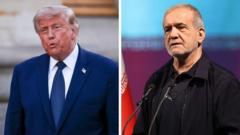
US, Iran Presidents Ink Peace Deal, Reopening Strait of Hormuz
US and Iranian presidents signed a peace deal to end the war, reopening the Strait of Hormuz and lifting sanctions on Iran.
The presidents of the United States and Iran have signed an initial peace deal aimed at ending their ongoing war, with the agreement taking immediate effect. The landmark accord includes the reopening of the vital Strait of Hormuz and a significant reconstruction plan for Iran, alongside the termination of all U.S. sanctions against the nation.
The conflict, which began on February 28 with the assassination of Iran's Supreme Leader Ayatollah Ali Khamenei and top military officials by the U.S. and Israel, had escalated into a major global economic concern. The war's impact was significantly felt through soaring energy prices and renewed inflationary pressures, largely due to Iran's de facto closure of the Strait of Hormuz, a critical global trade route for oil and liquefied natural gas.
U.S. President Donald Trump, who finalized the deal in France during the G7 summit, stated that the agreement would avert a global economic catastrophe. He noted the positive impact peace talks had on the stock market, contrasting it with the negative effects of stalled negotiations. Iranian President Masoud Pezeshkian also signed the document, though Iran's parliamentary speaker and chief negotiator, Mohammad Bagher Ghalibaf, expressed lingering distrust, warning that Iran's "finger is on the trigger" and that the nation would respond with force if necessary.
The agreement's most immediate impact has been seen in oil markets, with prices dipping following the announcement. Brent crude saw a slight decrease in early Asian trading. However, a key point of contention, Iran's nuclear program, remains to be negotiated over a 60-day period.
President Trump emphasized the economic benefits of the deal, telling reporters that continuing the conflict could have led to a worldwide depression. He highlighted the volatility of financial markets in response to news of potential peace or continued hostilities.
Details of the agreement reveal a $300 billion plan designated for Iran's reconstruction, indicating a significant commitment to rebuilding the nation following the war's devastation. The termination of all U.S. sanctions is also a major concession, expected to revitalize Iran's economy.
Despite the signing, Iranian officials have signaled that vigilance remains high. Ghalibaf's strong rhetoric suggests that while a peace deal is in place, the underlying tensions and distrust have not been fully resolved, leaving the long-term stability of the agreement uncertain.
The future of the Iran nuclear program negotiations, set to occur over the next 60 days, will be crucial in determining the complete resolution of the conflict and the establishment of lasting peace between the two nations.
This article was written by AI based on publicly available news reporting. Original reporting by the linked source.