US Lifts Naval Blockade After Iran Deal; Khamenei Claims Trump Acted "Out of Desperation"
The US has ended its naval blockade of Iran following a deal to end the Middle East war, with Iran's Supreme Leader criticizing President Trump's motives.
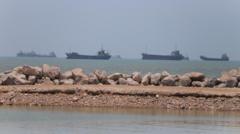
The United States has officially lifted its naval blockade of Iran, a move confirmed by US Central Command on social media platform X. This action follows the signing of a deal intended to bring an end to the ongoing war in the Middle East. While some US naval vessels will remain in the general vicinity, the cessation of the blockade marks a significant de-escalation.
This development comes after weeks of intense negotiations and escalating regional tensions. The war, which erupted following US-Israeli strikes on Iran in late February that killed Iran's then-Supreme Leader Ayatollah Ali Khamenei, has destabilized the region and drawn in multiple actors. The lifting of the blockade signals a potential turning point in the conflict.
Iran's Supreme Leader, Mojtaba Khamenei, who assumed office in March, commented on the agreement, stating he approved it "despite having a different view." He indicated that assurances from Iran's President Masoud Pezeshkian regarding the protection of the nation's rights were instrumental in his decision. Khamenei also asserted that President Trump "out of desperation, used all kinds of leverage to bring the deal about," suggesting a perceived weakness in the US negotiating position.
The agreement is reportedly centered around 14 key points. These include the critical reopening of the Strait of Hormuz, a firm stipulation that Iran must not possess nuclear weapons, and a commitment to a $300 billion fund designated for Iran's reconstruction and economic development. Notably, the US is not obligated to contribute financially to this fund. The deal sets a timeframe of a maximum of 60 days for achieving a final agreement, with provisions for mutual consent to extend this period.
Mojtaba Khamenei's remarks are his first public response to the agreement and come after a period of public absence since his ascension to leadership. His father and predecessor, Ayatollah Ali Khamenei, was killed in the February strikes, an event that directly precipitated the current regional conflict. The new Supreme Leader's cautious endorsement and critical commentary on Trump's motivations offer insight into the internal dynamics within Iran.
President Trump has not directly addressed Khamenei's specific claims about desperation. However, he posted on Truth Social expressing expectations for a ceasefire "on all fronts," specifically mentioning the conflict between Israel and Hezbollah. He also indicated an expectation that Middle Eastern countries would uphold their commitment to facilitating ongoing negotiations, underscoring the broader geopolitical implications of the deal.
The official signing ceremony, initially scheduled to take place in Switzerland on Friday, was reportedly cancelled. Mediator Pakistan informed the BBC that the ceremony did not occur because the deal had already been concluded remotely. Despite this, US and Iranian representatives are still anticipated to meet in Switzerland for subsequent discussions, signaling that diplomatic engagement is expected to continue.
US Vice-President JD Vance, speaking at a White House briefing, confirmed that the deal had come into effect, triggering the stipulated terms, though further details of the immediate impacts were not elaborated upon in the provided material. The precise mechanisms and immediate consequences of the deal's activation remain a subject of ongoing observation.
This article was written by AI based on publicly available news reporting. Original reporting by the linked source.