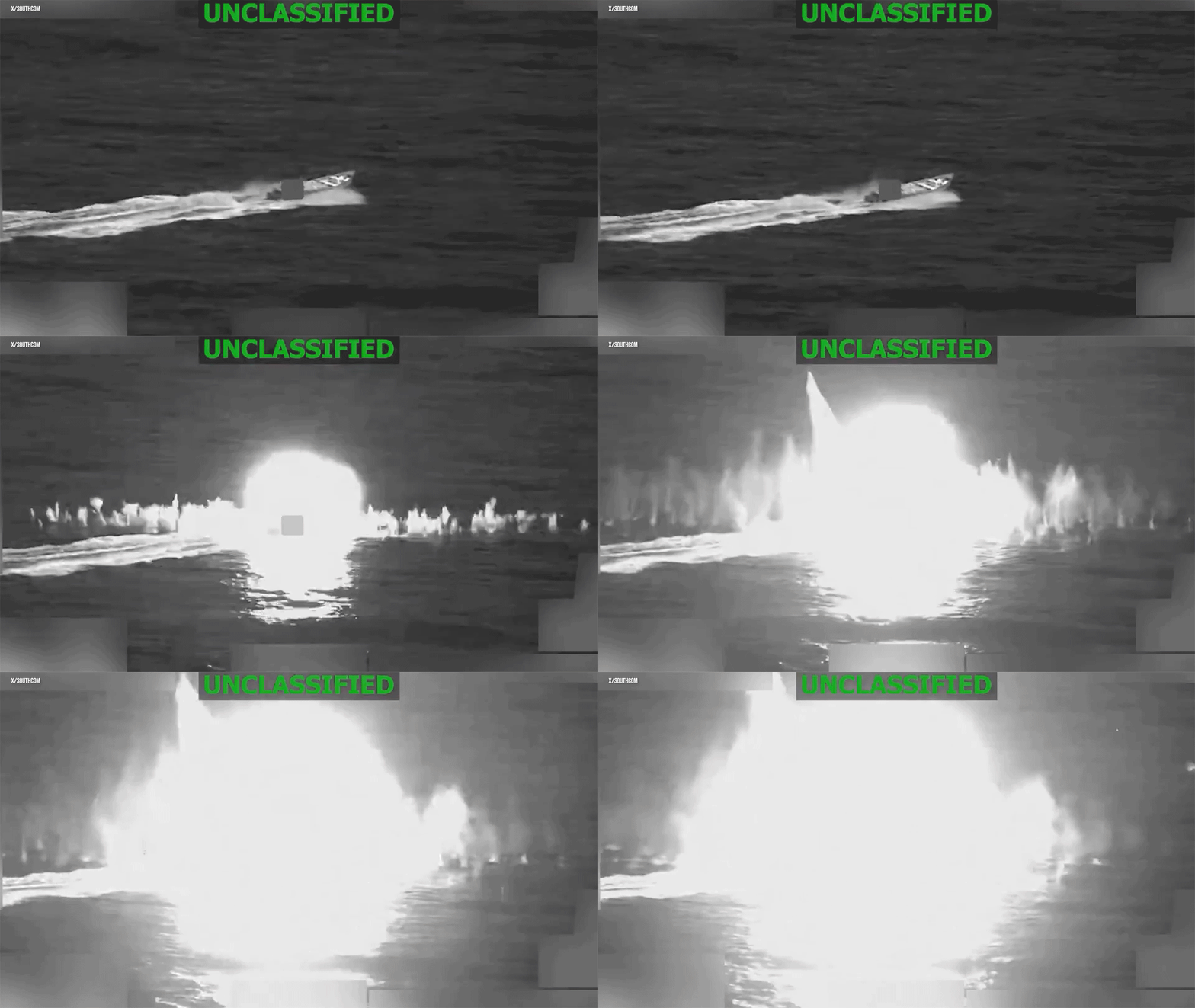
US military strike kills alleged narco-terrorist on Eastern Pacific drug vessel
US Southern Command conducted a lethal strike on a drug-trafficking vessel in the Eastern Pacific, resulting in the death of an alleged narco-terrorist.
The U.S. military has carried out a lethal strike against a suspected drug-trafficking vessel in the Eastern Pacific Ocean, resulting in the death of an alleged narco-terrorist. The operation was conducted by the U.S. Southern Command (SOUTHCOM), which oversees military operations in the region.
This action is part of ongoing efforts by the U.S. to combat illicit drug trafficking and related criminal organizations operating in international waters. These groups often finance their activities through the sale of illegal narcotics, posing a threat to regional stability and U.S. national security.
Details surrounding the specific vessel and the individual targeted remain limited. However, SOUTHCOM has indicated that the operation was a direct response to intelligence regarding the vessel's involvement in drug smuggling and its alleged ties to terrorist financing. The strike was designed to neutralize the threat posed by the individual and disrupt the flow of illicit substances.
The incident underscores the complex challenges faced by international forces in interdicting drug shipments and combating transnational criminal enterprises. The Eastern Pacific remains a significant transit zone for narcotics destined for various global markets.
Drug trafficking organizations are known for their sophisticated methods and their ability to adapt to interdiction efforts. They often operate with significant financial resources, which can be used to fund other illicit activities, including terrorism. This has led to the term "narco-terrorism" to describe the convergence of these two threats.
SOUTHCOM has a mandate to counter these threats through a variety of means, including intelligence gathering, maritime patrols, and interdiction operations. These efforts aim to disrupt the flow of drugs, dismantle criminal networks, and prevent the proceeds of illegal activities from supporting other harmful enterprises.
The effectiveness of such strikes in the long term is a subject of ongoing debate among security experts. While they can disrupt immediate operations and remove key individuals, the underlying demand for drugs and the profitability of the trade can lead to the emergence of new organizations and routes.
Further information regarding the specifics of the operation and its broader implications is expected to be released by U.S. military authorities as investigations continue.
This article was written by AI based on publicly available news reporting. Original reporting by the linked source.