US, Saudi Arabia Sign Landmark Nuclear Deal, Allowing Uranium Enrichment
The US and Saudi Arabia have signed a major nuclear cooperation agreement, potentially allowing the kingdom to enrich uranium.
The United States and Saudi Arabia have signed a landmark nuclear cooperation agreement that could permit the Gulf kingdom to develop a civilian nuclear program, including the potential to enrich uranium in the future. The deal, described as a "peaceful nuclear co-operation agreement," is expected to provide significant opportunities for American companies within Saudi Arabia's burgeoning nuclear energy sector, according to the U.S. Department of Energy.
This agreement arrives at a critical juncture in regional geopolitics, as tensions escalate between the U.S. and Iran. Saudi Arabia, a key U.S. ally that hosts several American bases, has recently faced increased pressure from Iran and its proxies, including a maritime blockade announced by Yemen's Houthi allies.
While the full text of the deal has not been made public, U.S. media reports suggest it could allow Saudi Arabia to enrich uranium on its own soil. This enriched uranium would serve as fuel for nuclear power plants, but the process also carries the risk of producing material that could be used to develop nuclear weapons. Experts have voiced concerns that this arrangement marks a new precedent for the U.S. and could increase the risk of nuclear proliferation in an already volatile region.
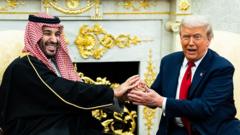
Alongside the cooperation deal, a bilateral safeguards agreement was also signed. The Department of Energy stated that these agreements "lay the legal foundation for a decades-long, multi-billion-dollar partnership that advances several priority economic and strategic objectives, including nuclear nonproliferation." The Saudi government confirmed the deal, characterizing it as an "extension of existing co-operation" in the energy sector, following a visit by the Saudi leader to Washington last November.
Earlier media reports indicated that Saudi Arabia might be permitted to enrich uranium at a U.S.-built facility after conducting a joint study with the U.S. This could represent a multi-billion-dollar opportunity for U.S. companies involved in constructing such facilities, potentially reducing Saudi Arabia's reliance on imported nuclear fuel.
U.S. Secretary of Energy Chris Wright emphasized the deal's adherence to stringent standards, stating, "Rest assured, these agreements uphold the highest standards of nuclear safety and nonproliferation, while relying on the world's best nuclear technology and scientists, designed right here in the United States." The Department of Energy further asserted that the pact enhances both U.S. and regional security, strengthens America's competitive edge in civil nuclear technology, and maintains high standards of safety and nonproliferation.
However, nuclear experts and former officials, particularly from Israel, a close U.S. ally, have expressed apprehension. They suggest the deal could pave the way for Saudi Arabia to eventually develop nuclear weapons, although many analysts believe such a path would likely take decades and face significant international opposition.
Rosemary Kelanic, director of the Middle East program at the Defense Program, indicated that while the deal aims to prevent proliferation, the specifics of oversight and future Saudi capabilities remain subjects of international scrutiny.
This article was written by AI based on publicly available news reporting. Original reporting by the linked source.