US Strikes Iran After Drone Attack on Cargo Ship in Strait of Hormuz
The US military targeted Iranian missile and drone facilities following a drone attack on a cargo ship, escalating regional tensions.
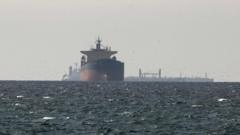
The United States military conducted targeted strikes on Iranian facilities Friday, hours after a drone attack on a cargo ship in the vital Strait of Hormuz. President Donald Trump accused Iran of a "foolish violation of its truce" following the incident.
No casualties were reported when the cargo ship was struck by a one-way attack drone on Thursday, an event that had prompted a planned evacuation for thousands of sailors in the region. The US Central Command (Centcom) stated that its response on Friday targeted missile and drone storage facilities and coastal radar positions.
Centcom described the strikes as a "powerful response" to the drone attack, asserting that the "unwarranted aggression against commercial shipping by Iranian forces clearly violated the ceasefire." The command further noted that Iran's actions undermined freedom of navigation through the "vital international trade corridor."
It remains unclear whether the US strikes are isolated incidents or part of a broader, ongoing retaliatory campaign. The US military has pledged to continue providing "safe passage coordination and support to commercial vessels transiting the strait."
Iran's Islamic Revolutionary Guard Corps (IRGC) blamed both the US and Israel for the escalation. In a statement, the IRGC referred to the US as a "treaty-breaking regime" that violated its commitments, launching an "airstrike on the coast of the Islamic Republic of Iran under various pretexts." The IRGC warned that if such aggression is repeated, Iran's response would be more extensive.
The IRGC also accused Israel of violating a ceasefire in Lebanon, a statement made as Israel and Lebanon signed a framework agreement for a peace plan in Washington on Friday. Limited clashes have recently persisted between Israeli forces and the Iran-backed Hezbollah in southern Lebanon, despite an existing truce.
This latest exchange follows a period of heightened tension after Tehran effectively closed the Strait of Hormuz at the end of February, following US and Israeli attacks. The disruption of this critical waterway for oil and gas shipments led to a surge in global oil prices and hampered the flow of other essential commodities.
On June 17, the US and Iran had agreed to end hostilities under a 14-point memorandum of understanding. This agreement also stipulated that Iran would facilitate the safe passage of commercial vessels without charge for 60 days. Vice-President JD Vance commented on X that if Iran has "disagreements about how the MOU is being applied, they can pick up the phone," but added that "violence will be met with violence."
This article was written by AI based on publicly available news reporting. Original reporting by the linked source.