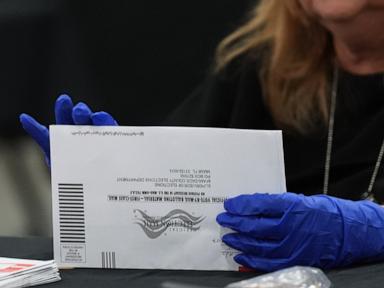
USPS Mandates New Mail-in Ballot Verification Rules
USPS introduces new verification rules for mail-in ballots, requiring voter data collection before ballots enter the mail stream.
The United States Postal Service (USPS) has announced a new regulation requiring verification of all mail-in ballots before they are processed. These changes are contingent on a court lifting its current injunction, after which they would be implemented immediately. The proposed rule mandates that states collect and report basic voter information, including name and home address, which would be linked to a unique barcode on each distributed mail-in ballot.
State election authorities would then be responsible for entering this information into a federal ballot mail portal prior to the ballot entering the mail stream. The USPS has stated it will not deliver ballots to any state failing to comply with these new requirements. This initiative arrives after several months of governmental efforts aimed at enhancing election integrity through the collection of voter information.
Some experts have voiced concerns that concentrating such data within federal systems could undermine the Constitution's framework of state-administered elections. Jonathan Diaz, director of voting advocacy for the Campaign Legal Center, expressed apprehension, stating that federal control over voter registration verification could grant significant power to shape the electorate.
The new requirements represent a modified approach compared to President Donald Trump's earlier demands. His March executive order had proposed more extensive measures, including statewide voter citizenship lists derived from Social Security or immigration databases, standardized ballot formats, and closer coordination between USPS, its Office of Inspector General, and the Department of Justice for investigating potential misuse of mail in federal elections. The USPS's final rule incorporates some of these demands but in a less stringent form, focusing on tracking eligible voters by name and address while largely excluding citizenship verification.
According to the USPS, no other voter details, such as birthdates or Social Security numbers, will be uploaded to the portal. The Postal Service explicitly stated that it will not be involved in determining voter eligibility, maintaining voter rolls, or counting ballots. The agency also clarified that this rule does not constitute a ban on mail-in voting and does not affect existing exceptions for military personnel, individuals with disabilities, illness, or travel.
While the USPS asserts that clear distinctions exist between the collected data and statewide voter rolls, the rule does indicate that the data gathered will aid in the enforcement of federal law. This could potentially provide federal law enforcement with lists of individuals who have received ballots.
The specific details of the federal ballot mail portal and the exact mechanisms for data sharing with law enforcement remain subjects of ongoing scrutiny. The implications for states that do not comply with the new verification process are also a point of focus, with the USPS indicating a halt in ballot delivery.
Further analysis will likely concentrate on the practical implementation of these rules, the potential burden on state election systems, and the ongoing debate surrounding federal involvement in election administration versus the traditional state-led approach.
This article was written by AI based on publicly available news reporting. Original reporting by the linked source.