USS Abraham Lincoln Concludes Record 10-Month Deployment, War Secretary Praises Crew
The USS Abraham Lincoln carrier strike group ends a record 10-month deployment, with Defense Secretary Hegseth commending the crew's resilience.
The USS Abraham Lincoln carrier strike group is set to return to its homeport of San Diego on Thursday, concluding an extensive 10-month deployment to the Middle East. During its mission, the strike group played a significant role in the war with Iran and established a new record for the longest period between port calls, reaching 265 days. In total, the ship will have spent 321 days deployed, marking the second-longest deployment since the end of the Cold War.
This deployment's length surpasses typical carrier strike missions, which have historically lasted around seven months in recent years. The extended duration underscores the strategic importance and demands placed upon naval assets in ongoing geopolitical situations. The USS Gerald R. Ford previously set the record earlier this year with a 326-day deployment.
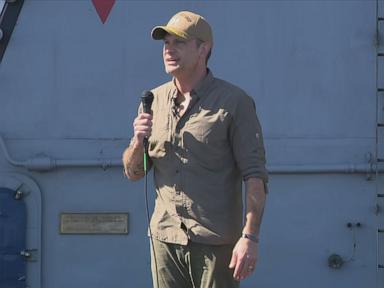
Defense Secretary Pete Hegseth visited the USS Abraham Lincoln on Wednesday, prior to its return, to recognize the crew's endurance and commitment. He informed sailors on the flight deck that their deployment had been extended twice due to their effectiveness in combat operations and the mission's necessity. Hegseth conveyed President Trump's confidence in their ability to perform for the American people.
Secretary Hegseth detailed the strike group's significant accomplishments, stating they conducted 10,000 sorties, accumulated 23,000 combat flight hours, and executed nearly 4,000 combat sorties. Additionally, they dropped approximately 1.5 million pounds of ordnance on enemy targets, a feat met with cheers from the assembled sailors. The aircraft assigned to the carrier had already returned to their California and Washington bases earlier in the week.
The prolonged deployment presented challenges for the Lincoln's crew, including supply disruptions that affected food stocks due to the war's onset. Reports indicated that the extended time at sea was impacting the crew's mental health. The Navy has acknowledged eight suicide attempts aboard the carrier during the deployment, including one instance where a sailor jumped overboard but was subsequently rescued. A U.S. official noted that this figure appears to be within the lower range of experiences during comparable carrier deployments.
Addressing potential criticisms, Secretary Hegseth stated that some media outlets attempted to portray the USS Abraham Lincoln as a symbol of dysfunction, low morale, or a failed mission. He countered these narratives by observing the crew and leadership, stating that the reality is the exact opposite of such depictions.
To honor their service, Hegseth announced the Presidential Unit Citation award for the Lincoln carrier strike group. This prestigious award recognizes exceptional distinction for military units. While reading the citation, he shared further statistics concerning the carrier group's extensive air operations during its mission.
The return of the USS Abraham Lincoln signifies the end of a particularly demanding operational period. The crew's ability to sustain operations and achieve mission objectives under such extended conditions highlights the resilience of naval personnel and the adaptability of military operations in complex environments.
This article was written by AI based on publicly available news reporting. Original reporting by the linked source.