Venezuelans decry government apathy after 1,700 die in earthquakes
Angry Venezuelans accuse their government of negligence and slow response following twin earthquakes that killed at least 1,700 people.
In the coastal town of La Guaira, Venezuela, anger and grief are palpable as citizens accuse their government of negligence and apathy in the wake of twin earthquakes that struck last Wednesday. The disaster has claimed at least 1,700 lives, leaving families desperately searching for loved ones trapped under rubble.
Rescuers were seen working tirelessly at the site of a collapsed 12-storey building, listening intently for any signs of life beneath the concrete slabs. The operation, however, has been marred by accusations of a delayed and insufficient government response. Families on the scene expressed frustration that precious time was lost before organized rescue efforts began.
Miguel Oscar Nunez, whose 34-year-old son Angel was in the collapsed building, voiced the sentiment of many. "We need more support from authorities urgently to dig them out," he stated, his anger evident. "It's possible that the earthquake has not killed him, but can you imagine if he is killed because of the negligence of the authorities?"
Kevin Montilla, another resident whose home was in the same building, echoed these concerns. His wife and teenage daughter were home when the earthquake hit. "The rescue operation started very late and it's been slow," Montilla said. "The government's response has been frustrating and impotent."
While rescue teams, including those from Venezuela and Colombia, were present at the prominent, government-owned building complex, the scale of the devastation across La Guaira state means that search teams have yet to reach some affected areas. The focus on this particular site, due to its visibility and ownership, has left some questioning the equitable distribution of resources.
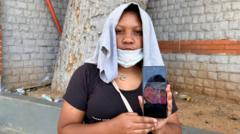
Deilisbeth Herreira was desperately searching hospital lists for her two young daughters, Greydelys, 12, and Graybelys, 13, who were likely at home when the quakes struck. As a single parent, her anguish highlights the profound personal toll of the disaster and the perceived lack of swift, comprehensive governmental aid.
Interim President Delcy Rodríguez has described the earthquakes as the "most brutal natural catastrophe in Venezuela's history." However, the ground-level reality for many survivors points to a significant gap between the government's acknowledgment of the tragedy and the tangible support being provided to those affected.
The slow pace of rescue and recovery operations, coupled with the sheer scale of destruction, has fueled widespread discontent. Many Venezuelans feel abandoned, left to cope with the aftermath of the earthquakes largely on their own, grappling with loss and the agonizing uncertainty of their loved ones' fates.
This article was written by AI based on publicly available news reporting. Original reporting by the linked source.