Wizz Air UK Boss: Arrive 3 Hours Early for European Flights Amid Border Delays
Wizz Air UK's managing director warns holidaymakers to arrive three hours before European flights due to new border checks causing long queues.
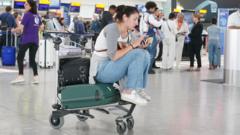
UK holidaymakers flying home from Europe should arrive at airports three hours before their departure time, the UK boss of budget airline Wizz Air has advised. Yvonne Moynihan, UK managing director of Wizz Air, warned that lengthy queues caused by new EU border checks could lead to passengers missing return or connecting flights.
These new border checks are part of the European Union's Entry Exit System (EES), which requires travellers from outside the EU to register biometric information, such as fingerprints, upon entry into many European countries. This data is then verified upon departure. The system is intended to enhance border security and manage migration flows within the Schengen Area.
Moynihan told the BBC that the impact of the EES has been inconsistent across Europe, with some airports experiencing smooth processing while others, particularly in popular destinations like Spain, Portugal, and France, have seen significant queues. She noted that while her own recent experience in Mallorca was smooth due to extra staff and kiosks, her airline is generally advising passengers to prepare for longer waits.
The implications of these delays are considerable for both travellers and airlines. Passengers may face missed connections and the stress of uncertainty, while airlines could see increased operational challenges and potential disruption to flight schedules. The increased check-in times could also affect airport capacity and passenger flow.
Moynihan highlighted that the requirement to verify EES information before departure creates an additional passport check, leading to longer waiting times than anticipated. She contrasted the usual recommendation of arriving two hours before a flight with the current advice of three hours, especially for flights returning to the UK.
While a European Commission spokesperson stated that the EES is working well at almost all border crossings, ACI Europe, a trade body representing airports, has advised passengers to adhere to the arrival times specified by their airlines. The system has already registered nearly 80 million entries and exits since October, with 35,000 refusals of entry recorded.
Despite concerns about potential disruption, Greece has effectively suspended biometric checks for British citizens at its borders to prevent issues during the summer travel season. This move highlights the varying approaches being taken by member states to manage the implementation of the EES.
The evolving situation raises questions about the long-term effectiveness of the EES and its impact on tourism and travel. While the system aims to bolster security, its current implementation appears to be causing significant practical challenges for travellers, prompting airlines to issue updated guidance to manage passenger expectations and mitigate potential problems.
This article was written by AI based on publicly available news reporting. Original reporting by the linked source.