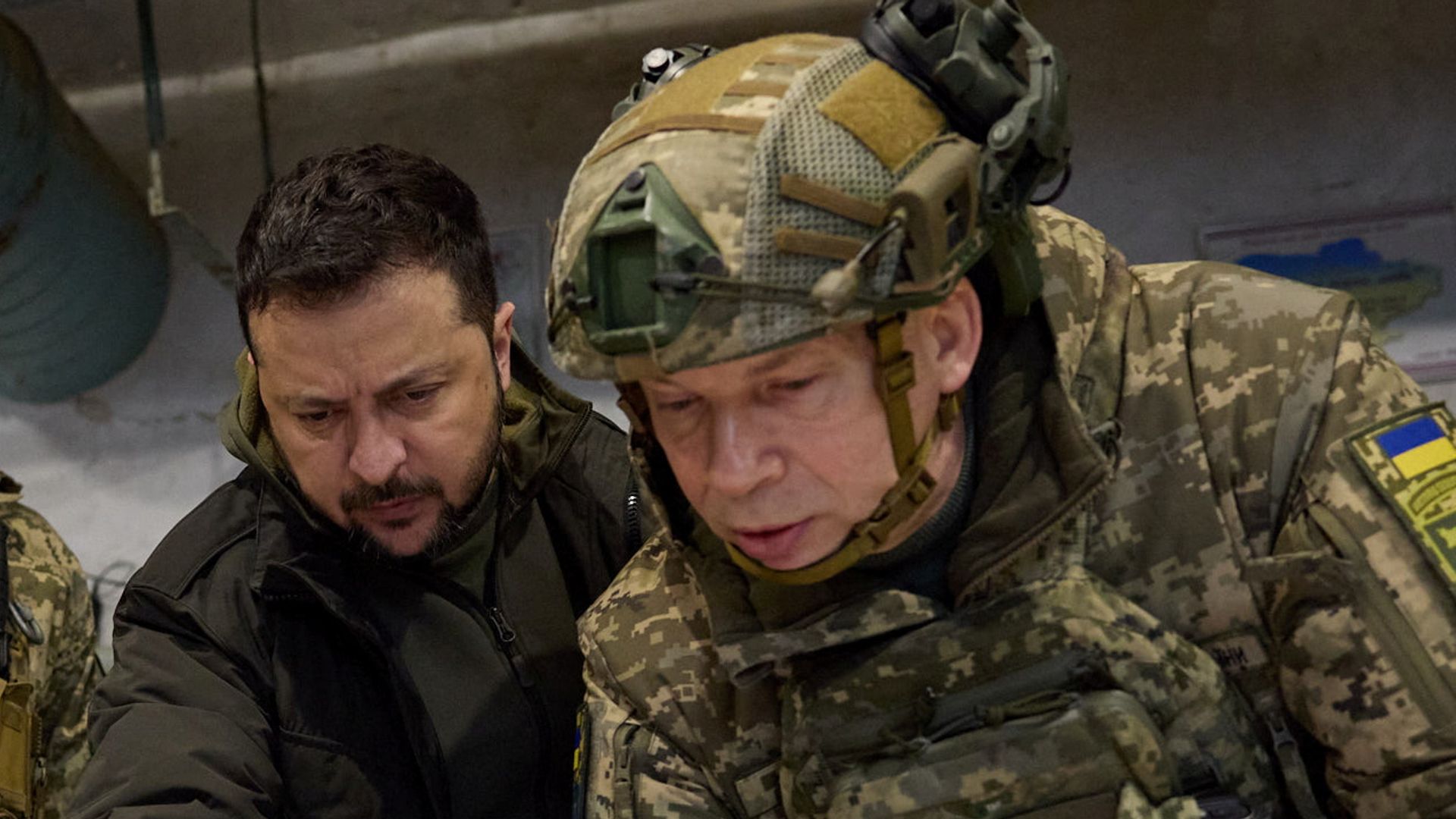
Zelenskyy Sacks Army Chief Valerii Zaluzhnyi Amid War
President Zelenskyy dismissed Ukraine's top general, Valerii Zaluzhnyi, a dramatic shift in wartime leadership. A former defense minister is eyed for return.
President Volodymyr Zelenskyy has dismissed General Valerii Zaluzhnyi as commander-in-chief of Ukraine's armed forces, a significant leadership change at the apex of the country's military command amidst the ongoing war with Russia. The decision, announced on Thursday, marks a pivotal moment for Ukraine's wartime strategy and its public-facing military leadership.
Zaluzhnyi, a highly popular figure who has led the Ukrainian military since 2021, was widely credited with Kyiv's initial resistance against the Russian invasion and subsequent counteroffensives. His removal comes at a critical juncture, with Ukraine facing renewed pressure on the front lines and seeking sustained international military aid.
The president's office did not provide a specific reason for the dismissal, but reports suggest a divergence in strategic views between Zelenskyy and Zaluzhnyi. Some analysts point to recent public disagreements over the direction of the war and the pace of mobilization efforts. The move has generated considerable discussion within Ukraine and among its international partners.
Following Zaluzhnyi's dismissal, President Zelenskyy is reportedly considering appointing Colonel-General Oleksandr Syrskyi, the commander of Ukraine's ground forces, to the top military post. Syrskyi has experience leading troops in some of the most intense battles of the war, including the defense of Kyiv and fighting in the eastern Donbas region.
The dismissal of General Zaluzhnyi, a figure who had become a symbol of Ukrainian resistance and military prowess, is seen by many as a potentially destabilizing move. His popularity among soldiers and the public was immense, and his removal could impact morale. International observers will be watching closely for any signs of division or uncertainty within Ukraine's command structure.
Adding to the complex leadership reshuffling, Zelenskyy also recently dismissed Rustem Umerov as Minister of Defence, reportedly due to a lack of decisive action and issues with procurement. The president is reportedly seeking to bring a former defense minister, Oleksii Reznikov, back into the fold, indicating a potential desire for continuity or a return to familiar leadership.
This period of significant change in military and defense leadership raises questions about the future strategic direction of Ukraine's war effort. The coming weeks will likely reveal the full extent of these changes and their impact on the battlefield, as well as on Ukraine's international partnerships.
As Ukraine navigates this critical phase of the conflict, the decisions made by President Zelenskyy regarding military leadership will be under intense scrutiny. The ability of the new command structure to maintain unity, adapt to evolving battlefield conditions, and effectively utilize international support will be paramount to the nation's defense.
This article was written by AI based on publicly available news reporting. Original reporting by the linked source.