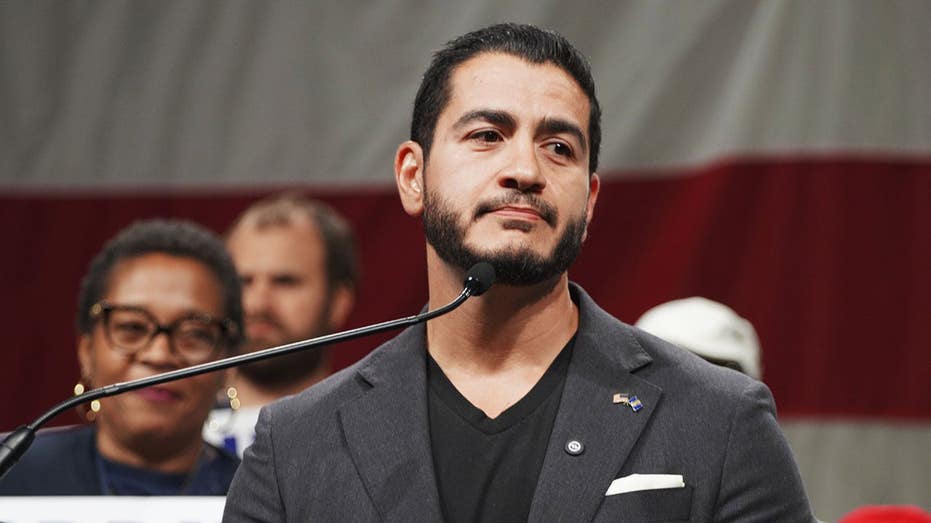
Abdul El-Sayed Jokes Michigan Football Needs Cheating to Win
Democrat Senate candidate Abdul El-Sayed made a controversial joke about Michigan football, sparking reactions from political rivals and sports figures.
Michigan Democratic Senate candidate Abdul El-Sayed recently made a jest suggesting that the University of Michigan football team might need to cheat to secure victories. The remark, made during a public forum, quickly drew attention and prompted responses from both the political and sports communities.
El-Sayed, who is running against Republican opponent Mike Rogers, has previously been associated with various viewpoints that have drawn scrutiny. This latest comment places his understanding and respect for collegiate athletics under a microscope as his campaign progresses.
Barstool Sports founder Dave Portnoy publicly reacted to El-Sayed's statement, while El-Sayed's Republican challenger, Mike Rogers, also issued a sharp rebuke. The exchange highlights the intersection of sports commentary and political discourse, a dynamic that often emerges during election cycles.
The implications of such remarks can extend beyond the immediate reaction, potentially influencing voter perceptions and campaign narratives. Political analysts suggest that comments touching on popular subjects like college sports can either resonate with certain demographics or alienate others, depending on the delivery and context.
This incident is not the first time El-Sayed's public statements have generated discussion. Earlier in his campaign, a University of Michigan student had put El-Sayed's stance on Iran into the spotlight, indicating a pattern of his remarks attracting significant attention. The nature of political campaigns often involves candidates navigating a landscape of public perception, where every statement can be analyzed and interpreted.
Mike Rogers, El-Sayed's opponent, has been actively engaged in public discourse related to El-Sayed's campaign. Reports indicate Rogers has addressed El-Sayed's football-related challenge on news programs, underscoring the competitive nature of their Senate race. The political rivalry is clearly playing out across multiple platforms, including commentary on sports.
While El-Sayed framed his comment as a joke, the reaction underscores the sensitivity surrounding integrity in sports, particularly in a state with a strong collegiate football following like Michigan. The response from figures like Dave Portnoy suggests a broader sentiment that such commentary, even in jest, can be perceived as disrespectful to the athletes and the spirit of competition.
As the election approaches, voters will likely weigh these and other statements as they consider their choice for the U.S. Senate. The incident serves as a reminder of how public figures, especially those in the political arena, must carefully consider their words, as even lighthearted remarks can carry unexpected weight and consequences.
This article was written by AI based on publicly available news reporting. Original reporting by the linked source.