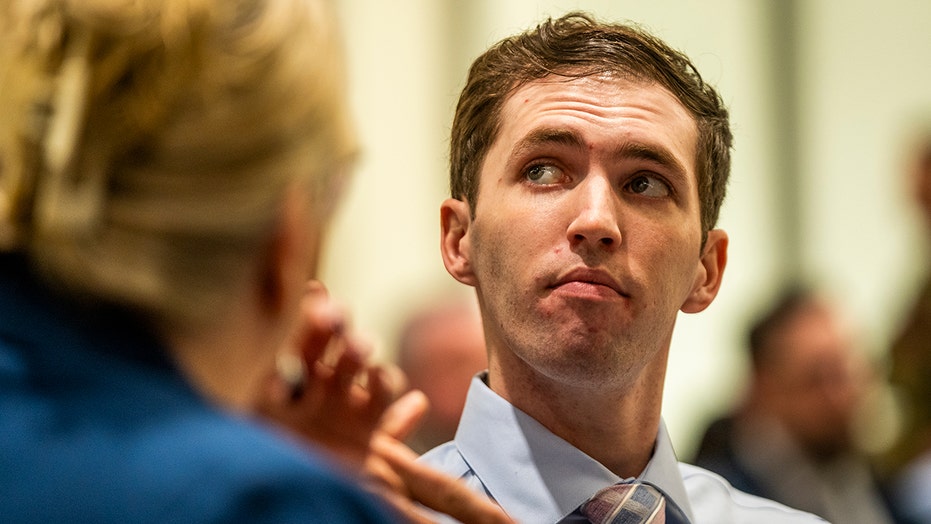
Accused Charlie Kirk Assassin Tyler Robinson Challenges State's Evidence
Tyler Robinson, accused of plotting to assassinate Charlie Kirk, contests the prosecution's evidence in a recent court filing.
In a significant legal development, Tyler Robinson, the individual accused of plotting the assassination of conservative commentator Charlie Kirk, has formally challenged the evidence presented by the state. The motion, filed in court, seeks to suppress key pieces of evidence that prosecutors intend to use against Robinson.
Robinson's legal team argues that the evidence in question was obtained through unconstitutional means, a common tactic in high-profile criminal cases where the prosecution's narrative hinges on specific findings. The details of the alleged assassination plot, which emerged last year, sent ripples through conservative and political circles, highlighting concerns about security for public figures.
The specific evidence challenged includes digital communications and financial records. Robinson's defense contends that these items were seized without sufficient probable cause, violating his Fourth Amendment rights against unreasonable searches and seizures. They are asking the court to exclude this evidence from the trial, which could significantly weaken the prosecution's case.
This legal maneuver sets the stage for a critical pre-trial hearing where the judge will weigh the arguments from both the defense and the prosecution. The outcome of this motion could profoundly impact the trajectory of the case, potentially leading to a dismissal of charges or a substantial shift in the evidence available for trial.
Robinson was arrested following an investigation that reportedly uncovered detailed plans to harm Kirk. Authorities stated at the time of his arrest that the alleged plot was in its early stages, but the seriousness of the allegations led to immediate concern. The case has drawn attention due to the political nature of the alleged target, making it a subject of discussion among those who follow political discourse and security issues.
Legal experts suggest that motions to suppress evidence are a standard part of criminal defense strategy, particularly when the evidence is considered the cornerstone of the prosecution's argument. The success of such motions often depends on the specific facts and circumstances of the evidence collection and the judge's interpretation of relevant legal precedents.
Prosecutors are expected to argue that the evidence was lawfully obtained and is crucial to proving Robinson's intent and actions related to the alleged plot. They will likely present their own filings detailing the justification for the searches and seizures that led to the discovery of the contested evidence.
The court's decision on this motion will be closely watched, as it represents a pivotal moment in the legal proceedings against Robinson. Further developments are anticipated as the case progresses towards a potential trial.
This article was written by AI based on publicly available news reporting. Original reporting by the linked source.