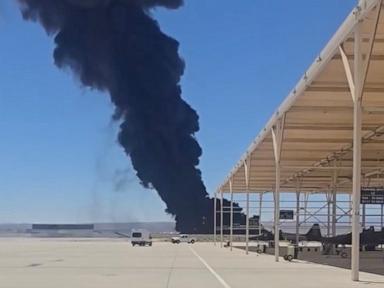
Eight Dead After Air Force B-52 Bomber Crashes After Takeoff in California
An Air Force B-52 bomber crashed shortly after takeoff at Edwards Air Force Base, killing all eight crew members.
Eight people died when an Air Force B-52 Stratofortress bomber crashed shortly after takeoff during a routine test mission at Edwards Air Force Base in California on Monday. The aircraft burst into flames upon impact, and the crash was deemed unsurvivable.
Col. James Hayes, deputy commander for the 412th Test Wing at the base, described the incident as a "horrible tragedy," confirming the loss of "eight great Americans." The crew was composed of a mix of uniformed military personnel, government civilians, and government contractors.
The incident occurred around 11:20 a.m. local time. Emergency response personnel were immediately dispatched to the scene. The names of the deceased will be released 24 hours after their next-of-kin have been notified. Boeing confirmed that two of its employees were among those killed, expressing their condolences and offering support to the families.
The cause of the crash is currently under investigation, a process Colonel Hayes indicated could take several months. The base has closed its airfield, diverting all inbound flights and canceling all operations for Tuesday.
Test missions, like the one the B-52 was conducting, are a regular occurrence at Edwards Air Force Base, which is a key site for testing new and developmental aircraft for both the Air Force and NASA. The B-52 Stratofortress, a long-range bomber first introduced in the 1950s and built by Boeing, remains a significant component of U.S. air power, capable of carrying conventional and nuclear weapons.
The B-52 has a long operational history, having been deployed in conflicts from Vietnam to operations in the Iran war. This incident marks a significant loss for the U.S. military and the aerospace industry.
Officials are working to account for all personnel involved in the mission and have secured the crash site. The investigation will likely examine all potential factors, including aircraft performance, weather conditions, and crew procedures.
This event raises questions about the ongoing service of aging aircraft like the B-52, which, despite extensive upgrades and continued strategic importance, are nearing the end of their designed operational lifespans.
This article was written by AI based on publicly available news reporting. Original reporting by the linked source.