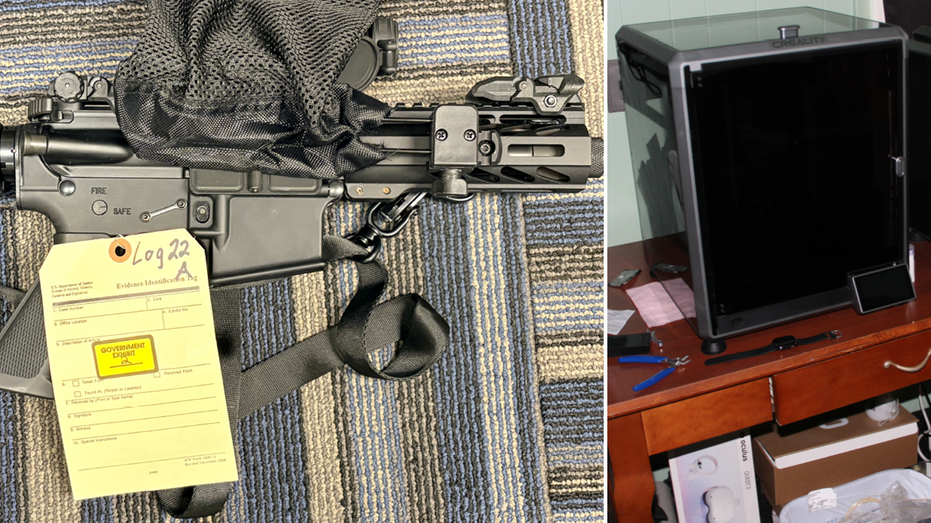
Ukrainian National Training as Air Force Officer Convicted in Ghost Gun Operation
A Ukrainian national training to be an Air Force officer was convicted after authorities discovered a 3D-printed ghost gun manufacturing operation in his home.
A Ukrainian national, who was undergoing Air Force officer training, has been convicted of charges related to a ghost gun manufacturing operation discovered in his residence. The conviction stems from the illegal production of firearms, often referred to as "ghost guns," which lack serial numbers and are difficult to trace.
The discovery of the operation occurred at the individual's home, leading to an investigation and subsequent charges. Ghost guns are a growing concern for law enforcement due to their untraceable nature, making it challenging to track their origin and prevent them from falling into the wrong hands. The ability to 3D print these weapons has further complicated efforts to regulate firearm manufacturing and distribution.
Authorities found evidence of a sophisticated 3D printing setup designed to produce firearm components. The investigation revealed that the individual was actively engaged in manufacturing these untraceable weapons. The specific number of firearms or components produced has not been fully detailed, but the presence of the operation itself was sufficient to warrant criminal charges.
The implications of this case extend beyond the individual, highlighting the potential for foreign nationals training within sensitive U.S. military programs to engage in illicit activities. It raises questions about the vetting processes and security protocols in place for individuals undergoing such training, particularly those from other countries.
Sources indicate that the individual was part of a program designed to train foreign military officers. The specific details of the training program and the individual's role within it were not fully disclosed. However, the fact that he was undergoing officer training suggests a level of trust and access that makes the discovery of the illegal operation particularly concerning.
Law enforcement agencies across the country have been grappling with the increasing prevalence of ghost guns. The ease with which components can be manufactured using readily available 3D printers and online schematics presents a significant challenge to existing gun control measures. This case underscores the need for continued vigilance and adaptation of strategies to address this evolving threat.
Details regarding the exact charges the individual pleaded guilty to, or the potential sentencing he faces, were not immediately available. The investigation appears to have been a collaborative effort between local law enforcement and potentially federal agencies, given the nature of the crime and the involvement of an individual in military training.
Further inquiries into the individual's background, his motivations for participating in the ghost gun operation, and the extent of any potential network involved are likely ongoing. The case serves as a stark reminder of the diverse threats that can emerge, even from within seemingly secure environments.
This article was written by AI based on publicly available news reporting. Original reporting by the linked source.