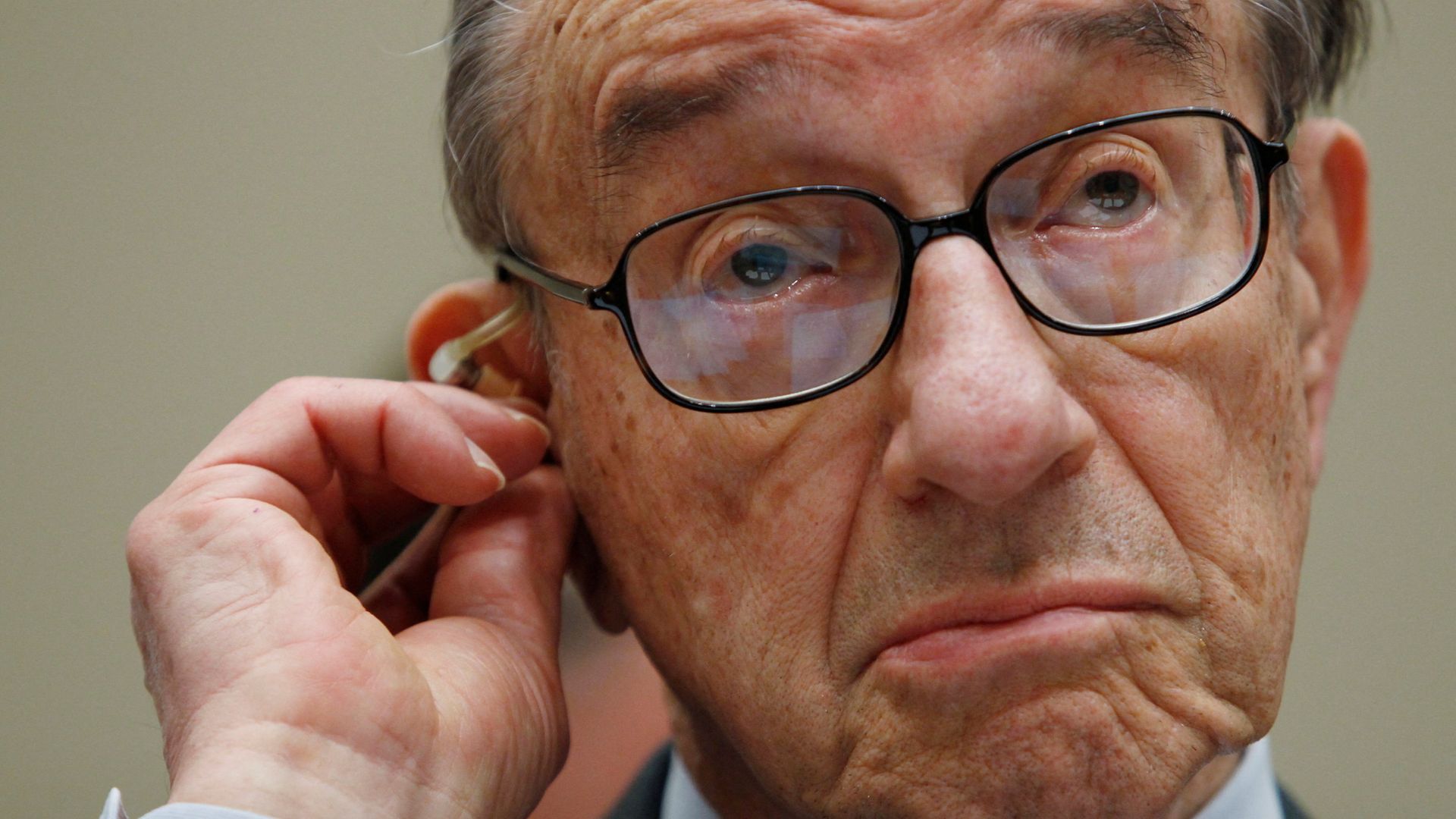
Alan Greenspan, Fed Chair for 19 Years, Dies at 100
Alan Greenspan, former Federal Reserve chair who led the U.S. central bank for nearly two decades, has died at the age of 100.
Alan Greenspan, the influential economist who chaired the U.S. Federal Reserve for nearly two decades, died on Tuesday at the age of 100.
Greenspan's tenure at the helm of the central bank, from 1987 to 2006, spanned periods of significant economic growth and considerable turmoil, including the dot-com bubble and the early stages of the housing boom that preceded the 2008 financial crisis.
His leadership was marked by a data-driven approach and a reputation for calm deliberation. He was known for his ability to communicate complex economic ideas, though his pronouncements were often analyzed for subtle meanings. He oversaw periods of both low and rising interest rates as he navigated the evolving economic landscape.
Greenspan's influence extended beyond monetary policy. His economic philosophy, often associated with free-market principles and a belief in the self-regulating nature of markets, shaped economic thinking for years. His decisions as Fed chair had a profound impact on global financial markets and the U.S. economy.
Before leading the Federal Reserve, Greenspan served in various government roles, including as chairman of President Gerald Ford's Council of Economic Advisers. He was first appointed to the Federal Reserve's Board of Governors in 1974.
His long service made him one of the most consequential figures in modern American economic history. He was reappointed by three presidents: Ronald Reagan, George H.W. Bush, and Bill Clinton, underscoring his perceived stability and expertise.
Greenspan's legacy remains a subject of debate among economists and policymakers. While credited by some for fostering economic stability and growth during his time, others have scrutinized his role in the lead-up to the 2008 financial crisis, particularly his views on financial deregulation.
His death at 100 marks the end of an era for a figure who played a pivotal role in shaping economic policy and discourse for a generation.
This article was written by AI based on publicly available news reporting. Original reporting by the linked source.