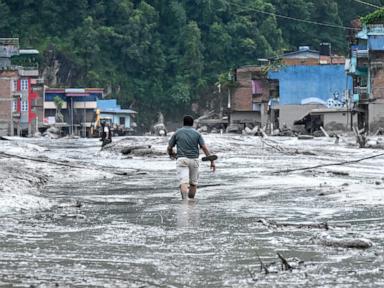
Nepal Floods: Hundreds Missing, Including 47 Americans, Officials Report
Devastating flash floods in Nepal's Rasuwa district have left over 150 dead and hundreds missing, including at least 47 American tourists.
Serious flash flooding on Wednesday morning has resulted in over a hundred reported deaths and hundreds more missing, including at least 47 American tourists, according to Nepali officials. The disaster struck the northern Rasuwa district, situated on the border with Tibet, around 8:40 a.m. local time.
The massive wall of water inundated areas along the Trishuli River, causing significant damage to buildings, bridges, and roadways. The incident has prompted a large-scale search and rescue operation, with the Nepali Army continuing efforts through the night. The State Department acknowledged the situation but stated that an accurate figure for missing Americans is not yet available, noting that the number has fluctuated.
Nepali police confirmed 157 deaths in the flood-affected regions, while Chinese state-run media reported three fatalities. The Prime Minister's Office of Nepal stated that at least 403 foreign nationals and 93 Nepali tourists are missing. The Nepali Tourism Board specifically highlighted the absence of contact with at least 47 American tourists since the floods hit.
Broader implications of the disaster are still being assessed, with infrastructure damage hampering immediate relief efforts. The region is a popular route for pilgrims traveling to Mount Kailash, a sacred site in Hinduism, Buddhism, and Jainism, located near the Nepal-Tibet border.
In a statement shared on social media, Nepal's office of the prime minister expressed profound sorrow over the loss of life, offering sincere condolences to the bereaved families. The office confirmed that search and rescue operations would persist through the night.
Among those affected were individuals on tours organized by the Isha Foundation. An influential spiritual figure associated with the foundation reported that 77 people on their tours were at an immigration center near the Nepal-Tibet border when the floods occurred. The foundation later confirmed that 22 of these individuals are American citizens.
The State Department has indicated that its staff in Washington, D.C., and Kathmandu are actively monitoring the situation and are in communication with the Government of Nepal. The U.S. has offered its readiness to provide assistance.
Authorities are continuing the identification process for the deceased, and the full extent of the human toll and property damage is expected to emerge as rescue and assessment operations progress. The remote location of the disaster and the scale of the flooding present significant challenges for relief efforts.
This article was written by AI based on publicly available news reporting. Original reporting by the linked source.