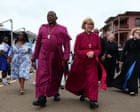
Archbishop vows £100m support for communities harmed by enslavement
Archbishop of Canterbury expressed regret at Cape Coast Castle and reaffirmed commitment to a £100m fund for communities affected by slavery.
Archbishop of Canterbury, Dame Sarah Mullally, has vowed to support a £100 million fund aimed at assisting communities impacted by historical enslavement. The commitment was made during her first visit to Ghana, where she toured the Cape Coast Castle, a historic site that once held thousands of enslaved Africans before their forced transport across the Atlantic.
This visit underscores the Church of England's ongoing engagement with its past involvement in the transatlantic slave trade. The £100 million fund represents a significant initiative to address the enduring legacies of this brutal period and to offer tangible support to affected populations.
During her poignant visit to the 17th-century fortress, Archbishop Mullally expressed profound "lament" for the Church's historical role. She was shown the grim dungeons where enslaved individuals were held and visited the "Door of No Return," a symbolic departure point for those taken to the Americas. The Archbishop also spent time in a former Anglican chapel situated above the dungeons, reflecting on the complex history.
The Archbishop's presence at Cape Coast Castle serves as a powerful symbol of repentance and a recommitment to restorative justice. Her reaffirmation of support for the £100 million pledge signals a determination to move forward with concrete actions that acknowledge past wrongs and contribute to healing.
Archbishop Mullally's tour of Ghana and Cameroon, part of the Anglican Church's West Africa Province, began with visits to local parishes in Accra. She delivered a sermon at a special service officiated by an all-female clergy, highlighting the evolving landscape within the church. As the 106th and first female head of the denomination, her journey carries historical significance.
The initiative for the £100 million fund has been met with varied reactions, with some viewing it as a crucial step towards reconciliation and others questioning its sufficiency or the practicalities of its distribution. The fund aims to channel resources towards education, economic development, and cultural preservation in communities historically affected by the slave trade.
Experts in post-colonial studies and restorative justice have noted the symbolic importance of such gestures from religious leaders. They emphasize that while apologies and financial pledges are vital, sustained commitment and effective implementation will be key to their long-term impact.
Further details on the allocation and management of the £100 million fund are expected to be released as discussions continue between the Church of England and representatives from affected communities. The Archbishop's visit marks a significant moment in this ongoing process of acknowledgment and reparative action.
This article was written by AI based on publicly available news reporting. Original reporting by the linked source.