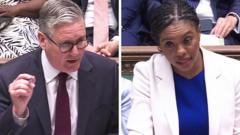
Badenoch: Starmer left £5bn defence spending 'mess' for Burnham
Kemi Badenoch accuses PM Starmer of leaving a £5bn defence funding gap for his successor, Andy Burnham.
Conservative leader Kemi Badenoch has accused outgoing Prime Minister Sir Keir Starmer of leaving a significant "mess" for his successor, Andy Burnham, regarding defence spending. Badenoch highlighted a purported £5 billion shortfall in the recently announced defence investment plan, questioning whether Burnham, widely expected to become Prime Minister on July 20, has agreed to fund the gap.
The long-awaited defence plan, unveiled by Sir Keir on Tuesday ahead of next week's Nato summit, outlines a £15 billion increase in defence spending by 2030. This plan aims to prepare UK forces for future conflicts. However, it falls short of the £28 billion reportedly sought by defence chiefs and former ministers John Healey and Al Carns, who resigned in protest over the initial proposals.
According to Defence Minister Luke Pollard, the Treasury has only identified £10.3 billion in savings to finance the plan. The remaining £4.7 billion, which Badenoch rounded to £5 billion, is expected to be allocated in the upcoming autumn Budget. Badenoch stated that the government appeared to be prioritizing welfare spending, suggesting that Starmer's plan had "completely unravelled" due to a lack of funding. She directly questioned Sir Keir at Prime Minister's Questions about Burnham's agreement to cover the shortfall.
Sir Keir Starmer, in response, accused the Conservatives of "faux outrage" and pointed to the Conservatives' own record of reducing defence spending during their time in government. He defended the Labour government's commitment to defence, stating he was "proud" of the plan and that any Labour Prime Minister would support it. He attributed the ability to commit to increased defence spending to "spare cash" or "headroom" built into Chancellor Rachel Reeves's budget last November.
The implications of this funding gap are significant for the incoming administration. Andy Burnham is widely expected to assume the role of Prime Minister, with Energy Secretary Ed Miliband considered a front-runner for the crucial position of Chancellor. The Treasury has declined to comment on whether Burnham's future Chancellor would need to utilize existing budget headroom to cover the defence funding deficit or if Burnham himself had approved the current defence spending proposal.
Defence Minister Luke Pollard acknowledged on BBC Breakfast that the next Chancellor would indeed need to find the necessary resources in the autumn Budget, describing this as a "pretty standard procedure for governments." The situation raises questions about the fiscal challenges facing the next government and the trade-offs it will inevitably confront in balancing national security priorities with other budgetary demands.
This defence funding debate comes at a critical juncture, with the UK's commitment to its armed forces and its role within NATO under renewed scrutiny. The reported underfunding, coupled with resignations over the initial plan, suggests internal divisions and external pressures on defence policy.
Further analysis will likely focus on the specific economic conditions that will influence the autumn Budget and the extent to which the incoming government can secure the necessary funds without compromising other key public services or its broader economic strategy.
This article was written by AI based on publicly available news reporting. Original reporting by the linked source.