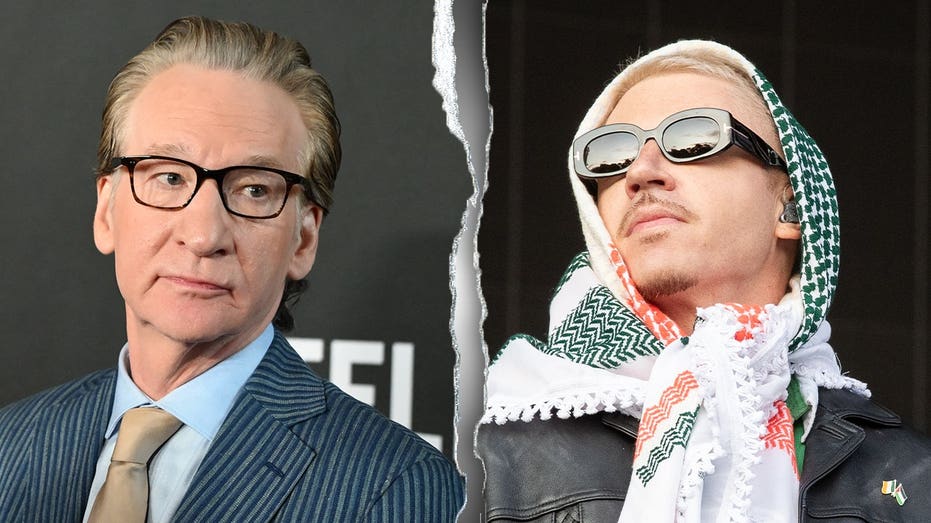
Bill Maher Criticizes Macklemore's Gaza Stance, Cites 'Moral Confusion' Fueling Antisemitism
Bill Maher criticized rapper Macklemore's recent statements on the Gaza conflict, arguing celebrity moral confusion contributes to rising antisemitism.
Television host Bill Maher has publicly criticized rapper Macklemore for his comments regarding the ongoing conflict in Gaza. Maher, speaking on his show "Real Time," suggested that public figures like Macklemore exhibit a form of "moral confusion" that, he believes, inadvertently fuels antisemitism.
Macklemore, whose real name is Ben Haggerty, recently posted a video expressing solidarity with Palestinians and criticizing President Biden's administration's response to the situation in Gaza. He referred to the events as a "genocide" and urged for a ceasefire, a stance that has drawn both support and criticism.
During his show, Maher questioned the rapper's understanding of the complex geopolitical situation. He argued that while public figures have the right to express their views, the way some celebrities frame these issues, particularly using strong language like "genocide" without what Maher perceives as sufficient nuance, can be misconstrued and harmful. Maher suggested this trend contributes to a broader societal issue where antisemitic sentiments can fester.
The host's remarks highlight a growing debate about the role of celebrities in political discourse, especially concerning international conflicts. Maher's commentary implies that a lack of deep understanding or a tendency towards simplistic moralizing by prominent individuals can have unintended negative consequences, potentially exacerbating existing societal tensions and prejudices against Jewish people.
This criticism comes amid a period of heightened global attention on the Israeli-Palestinian conflict. Many public figures, including artists and actors, have used their platforms to advocate for various positions. However, the specific framing of these issues and the language employed have become points of contention, with some accusing certain celebrities of oversimplifying complex geopolitical realities or employing rhetoric that can be interpreted as biased.
Maher's critique also touches upon the broader phenomenon of how public opinion is shaped, particularly by influential personalities. He appears to be suggesting that the perceived "moral confusion" among some celebrities, when applied to sensitive topics like the Israeli-Palestinian conflict, can lead to a dangerous blurring of lines and a potential increase in animosity towards specific groups.
Experts in media studies and sociology have noted the significant impact celebrity endorsements and statements can have on public perception. The challenge often lies in balancing freedom of expression with the responsibility that comes with a large public platform, especially when dealing with issues that carry historical weight and deep-seated sensitivities.
The discussion initiated by Maher's comments invites further examination into how the public, and particularly younger audiences influenced by celebrity culture, process information about international crises and the potential for such discourse to contribute to or combat prejudice.
This article was written by AI based on publicly available news reporting. Original reporting by the linked source.