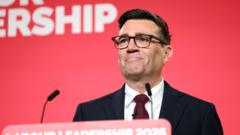
Burnham Becomes UK's Fifth PM in Four Years, Vows to End Political Churn
Andy Burnham is the UK's fifth prime minister in four years, aiming to stabilize government amid national impatience and political fragmentation.
By lunchtime today, the United Kingdom will have its fifth prime minister in four years, a statistic that encapsulates the current volatility of British politics. Andy Burnham is set to take office, following Boris Johnson, Liz Truss, Rishi Sunak, and Sir Keir Starmer. His ascent highlights a period of significant political churn and national impatience.
The backdrop to Burnham's arrival at Downing Street is the post-pandemic, post-Brexit 2020s, a time when many citizens feel life has become harder. This sentiment has led to unpopular governments and fragmenting political support, a trend Burnham is determined to reverse. His situation mirrors that of Sir Keir Starmer, who became prime minister on a sunny July day two years ago under similar national circumstances.
Burnham is reportedly acutely conscious of the rapid turnover at the top and is determined to "hit the ground running." He intends to maintain the leadership style he adopted as mayor of Greater Manchester, which may include ditching some traditional parliamentary conventions, such as potentially foregoing a lectern for his first speech outside Number 10. Allies suggest he favors "People's Question Time"-style events for direct public engagement.
Before Burnham's tenure begins, Sir Keir Starmer will depart following a final weekend at Chequers. Starmer is expected to deliver a brief farewell address, highlighting what his team considers key achievements, including reductions in immigration and NHS waiting lists, efforts to lift children out of poverty, and the introduction of a social media ban for teenagers. He will then formally tender his resignation to the King.
The transition will involve the announcement of new cabinet appointments, with particular attention on key positions like chancellor, home secretary, and foreign secretary. Figures such as Shabana Mahmood, Wes Streeting, Ed Miliband, Angela Rayner, and Lucy Powell are among those whose roles will signal Burnham's governing approach. A minister focused on artificial intelligence is also anticipated.
The new prime minister's immediate priorities are expected to include addressing the cost of living crisis and energy bills. The operational structure of Number 10 is also likely to be a focus, with potential enhancements to its capacity.
The rapid succession of prime ministers—Johnson, Truss, Sunak, Starmer, and now Burnham—underscores a period of profound political instability since the summer of 2022. Each leader has faced unique challenges, but the overarching theme has been the public's growing impatience and a desire for stability.
Burnham's challenge will be to break this cycle of frequent leadership changes and deliver tangible improvements that resonate with a public weary of political upheaval. His approach, blending traditional duties with a more direct, perhaps less formal, style of engagement, will be closely watched as he attempts to forge a new path for the country.
This article was written by AI based on publicly available news reporting. Original reporting by the linked source.