California Chemical Tank No Longer Threat of Catastrophic Explosion
Officials announced the immediate threat of a catastrophic explosion from a damaged chemical tank in Garden Grove, California, has been eliminated.
The immediate threat of a catastrophic explosion from a failing chemical tank in Southern California has been eliminated, according to officials.
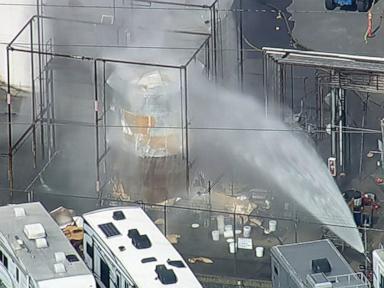
The temperature within the tank at an aerospace facility in Garden Grove, California, has declined, removing concerns about a potential Boiling Liquid Expanding Vapor Explosion (BLEVE) that could have resulted in a large fireball. Orange County Fire Authority (OCFA) Interim Chief TJ McGovern stated that the threat has been taken off the table.
Despite the reduced risk of explosion, officials cautioned that the crisis is not fully averted. McGovern explained that any potential leak or explosion, should it occur now, would be significantly smaller than the initial worst-case scenario. The cooling of the tank has allowed the chemical inside to solidify, though the extent of this solidification remains unclear.
Evacuation orders for approximately 50,000 people in the vicinity remain in effect, according to OCFA Division Chief Craig Covey. He urged residents to continue adhering to the established evacuation zones while authorities manage the situation.
The incident began Thursday when a 34,000-gallon tank at GKN Aerospace, a company producing aircraft components, showed signs of overheating. The tank contained methyl methacrylate, an industrial chemical used in plastic manufacturing, which can cause respiratory, skin, and eye irritation upon short-term exposure, according to the EPA.
California Governor Gavin Newsom declared a state of emergency in Orange County to address the unfolding situation. Authorities have been actively working to cool the bulging tank, which firefighters discovered had a crack on Saturday, relieving some internal pressure.
While the crack was not expected to cause chemical leaks, air quality in the region has been continuously monitored. Areas outside the roughly 10-square-mile evacuation zone are considered safe.
Further details on the exact amount of solidified chemical or the timeline for lifting evacuation orders have not yet been provided by officials.
This article was written by AI based on publicly available news reporting. Original reporting by the linked source.