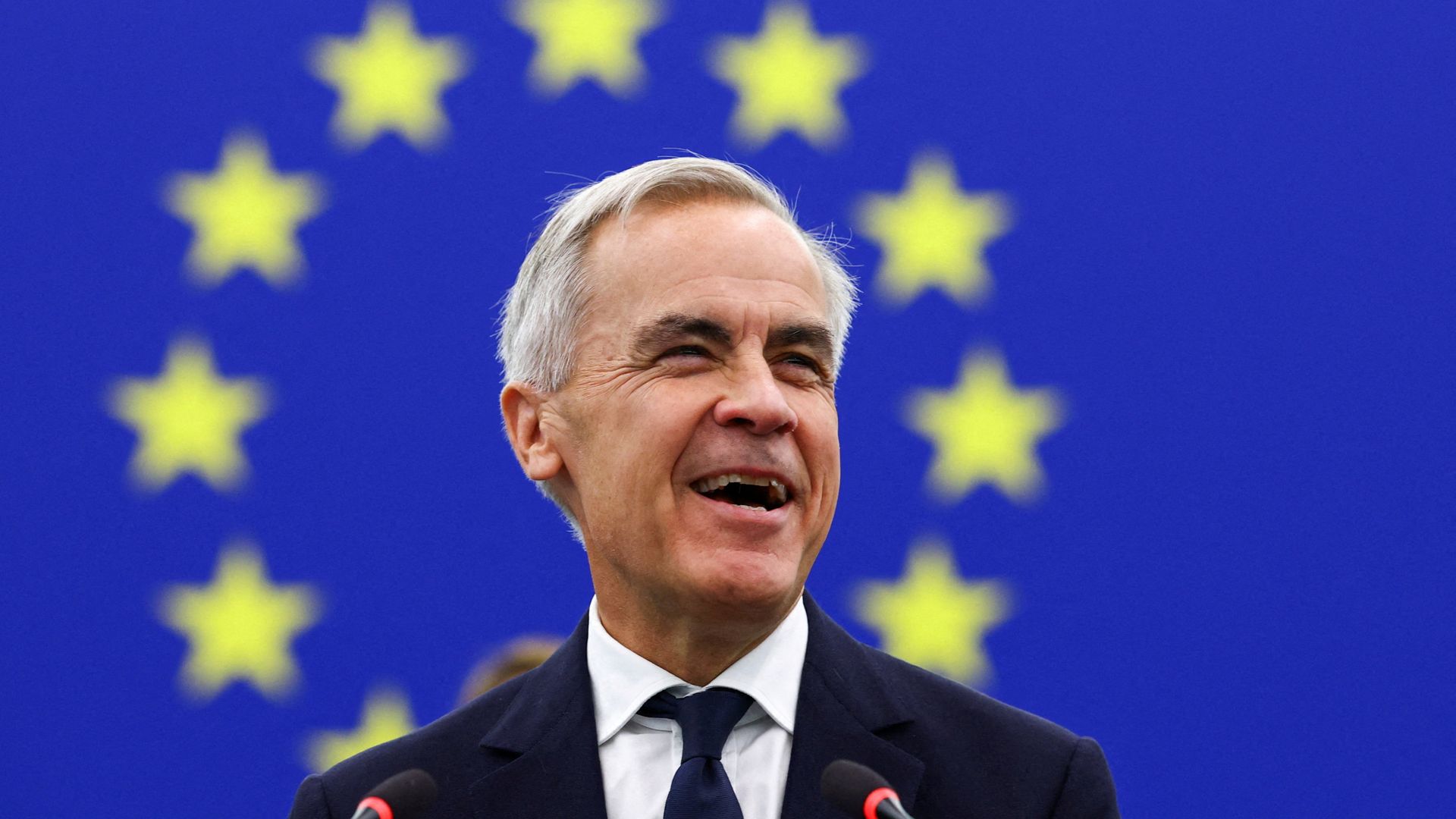
Carney Welcomes EU Associate Membership, Appears to Criticize Trump
Canadian Prime Minister Mark Carney expressed enthusiasm for potential EU associate membership, seemingly criticizing Donald Trump's trade policies.
Canadian Prime Minister Mark Carney has indicated a strong interest in becoming an "associate member" of the European Union, a move that appears to signal a departure from recent protectionist trade sentiments. Carney's remarks were made in a context where international trade relations have been strained, with some observers interpreting his statement as a subtle critique of policies advocated by figures such as former U.S. President Donald Trump.
The potential for associate membership comes at a time of significant global economic uncertainty. The European Union, a bloc of 27 nations, has been actively seeking to strengthen its economic and political ties with key international partners. Carney's willingness to explore such a relationship suggests a strategic alignment with European economic goals and a rejection of isolationist trade approaches.
While specific details of what "associate membership" would entail remain to be defined, Carney's positive reception to the idea underscores a broader diplomatic effort to foster closer collaboration. His comments were met with interest from European officials, who have been keen to bolster trade and security partnerships. The timing of these remarks, amidst ongoing trade disputes and political rhetoric challenging established international agreements, adds a layer of significance to his statement.
The implications of Canada pursuing associate membership in the EU could be far-reaching. It could lead to new trade agreements, increased investment, and enhanced political cooperation between Canada and the EU. This development also signals a potential shift in global trade dynamics, potentially creating a larger bloc of nations committed to multilateralism in the face of rising nationalism.
Carney's public statements have consistently advocated for open markets and international cooperation. His past roles, including as Governor of the Bank of England and the Bank of Canada, have positioned him as a prominent voice in global economic policy. His current stance aligns with a long-held belief in the benefits of integrated economies and strong international institutions.
The backdrop to these discussions includes a period marked by trade tensions, particularly following the Trump administration's imposition of tariffs on goods from various countries, including Canada. While Carney did not explicitly name any individual, the timing and nature of his remarks suggest a pointed commentary on trade policies that prioritize bilateral deals and protectionism over multilateral frameworks.
European leaders have generally welcomed overtures from countries willing to deepen ties with the bloc. The EU has been working to present a united front on economic and geopolitical issues, and the prospect of a significant North American partner like Canada seeking closer integration is seen as a positive development. Further discussions are expected to clarify the scope and benefits of such an associate membership.
Questions remain about the precise mechanisms and benefits of this proposed associate membership. The legal and economic frameworks required for such an arrangement will need to be thoroughly explored by both Canadian and EU authorities. Nevertheless, Carney's proactive engagement signals a clear direction for Canadian foreign economic policy.
This article was written by AI based on publicly available news reporting. Original reporting by the linked source.