Chief Justice Roberts Halts Order Blocking White House Ballroom Construction
Chief Justice John Roberts issued a temporary stay, allowing White House ballroom construction to continue despite a lower court's halt.
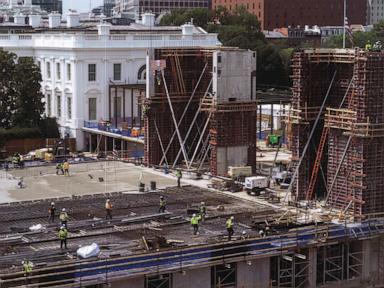
Supreme Court Chief Justice John Roberts has temporarily halted a lower court order that threatened to stop construction on President Donald Trump's East Wing ballroom project. Roberts issued an administrative stay on Friday, which prevents a lower court's injunction from taking effect later the same day. This order allows the White House to continue with the estimated $400 million project, which the administration has described as a military complex that is 65% complete.
The two-sentence order is brief and temporary, and it does not indicate the Supreme Court's position on Trump's appeal of the injunction or explain the need for more time to make a formal decision. The immediate impact is that construction can proceed without interruption on the controversial project.
Earlier, a lower court had ruled that President Trump exceeded his authority by demolishing the White House East Wing and initiating the construction of the 90,000-square-foot structure without explicit approval from Congress. A divided appeals court had previously affirmed this finding. The National Trust for Historic Preservation, the organization that filed the lawsuit, contends that the president must adhere to federal law when altering federal property.
The administration, however, has argued that upgrades to the White House fall under the president's prerogative and are not subject to judicial review, especially when national security is cited as a factor. President Trump unilaterally began the demolition of the East Wing in late 2025 to make way for the ballroom, a move that has sparked debate over executive power and the management of federal landmarks.
President Trump has previously referred to the ballroom as a critical military site essential to national security, suggesting it is more than just an addition to the building. He cited the Presidential Emergency Operations Center (PEOC), which has been located under the East Wing since the 1940s, as a reason for the project's importance. Military officials reportedly approached him with the opportunity to undertake significant improvements.
Federal law generally grants Congress control over federal property, including the White House grounds. However, it also provides presidents with the authority to undertake various forms of maintenance, repair, alteration, refurbishment, and improvement of the Executive Residence. The dispute centers on whether the scope of the ballroom project falls within the president's unilateral authority or requires congressional consent.
When asked earlier this week about the possibility of the Supreme Court ruling against him, President Trump expressed hope that such an outcome would not occur, stating he could not imagine it happening. The legal challenge highlights the ongoing tension between executive authority in managing the presidential residence and the legislative branch's oversight of federal property.
Further developments will depend on the Supreme Court's eventual formal decision on President Trump's appeal. The administrative stay provides a temporary reprieve, allowing construction to continue while the court deliberates on the broader legal questions surrounding presidential authority and national security claims in the context of White House renovations.
This article was written by AI based on publicly available news reporting. Original reporting by the linked source.