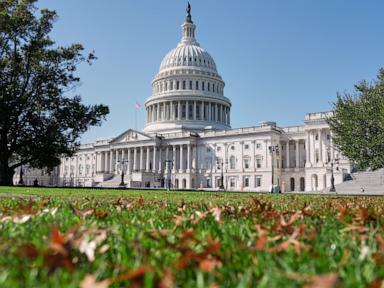
Congress Control Math: Republicans' 220-215 House Edge, Senate Race Tight
With one week until the midterms, Republicans hold a slim 220-215 House majority, while Senate control hangs in the balance.
With the midterm elections just one week away, control of both chambers of Congress is up for grabs, as voters consider a referendum on the current unified government. Republicans currently hold narrow majorities in both the House of Representatives and the Senate, and are working to maintain their hold as Election Day approaches.
Historically, midterm elections often serve as a check on the party in power, and this year is no exception. President Donald Trump's administration has seen Republicans control the White House, the House, and the Senate for the past two years. Now, the incumbent party faces the challenge of persuading voters to endorse their legislative record.
In the House of Representatives, all 435 seats are up for election on November 3rd. Speaker Mike Johnson of Louisiana currently presides over a slim majority of 218 Republicans and one independent, with Democrats holding 214 seats. Two vacancies, resulting from resignations over ethics issues, further narrow the effective margin. This leaves Speaker Johnson with a practical advantage of 220-215 over House Minority Leader Hakeem Jeffries.
Republicans are campaigning on legislative achievements such as the Working Families Tax Cuts Act, while also warning against progressive policies, which they sometimes label as "Mamdani madness." Speaker Johnson has stated that the administration is focused on lowering the cost of living and creating jobs, pointing to economic data as evidence of success.
Across the aisle, Hakeem Jeffries, a Democrat from Brooklyn, is seeking to make history as the first Black Speaker of the House. His campaign centers on themes of affordability and anti-corruption, directly challenging the Trump administration. Jeffries has expressed confidence that Democrats are positioned to win back the House majority, a feat that would require a net gain of at least three seats.
In the Senate, 35 of the 100 seats are being contested. Republicans currently hold a slim majority, but the outcome of these races will determine whether they can maintain their control or if Democrats can eke out a victory. The exact composition of the Senate majority will depend on the results of numerous competitive races across the country.
The Senate math is equally critical. With 13 Democratic seats and 22 Republican seats up for election, the balance of power is precarious. Control of the Senate is expected to hinge on a handful of swing states where races are projected to be extremely close, making every vote and every seat count.
As the election nears, both parties are intensifying their efforts to mobilize voters and secure the necessary seats to control Congress. The outcome will have significant implications for President Trump's legislative agenda and the direction of the country for the next two years.
This article was written by AI based on publicly available news reporting. Original reporting by the linked source.