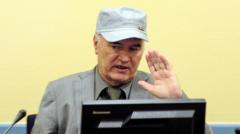
Convicted Bosnian Serb war criminal Ratko Mladić dies aged 84 in UN prison
Ratko Mladić, convicted of genocide and war crimes during the Bosnian War, has died at 84 in a UN detention facility.
Convicted Bosnian Serb war criminal Ratko Mladić has died in a UN prison at The Hague, aged 84. He was serving a life sentence for genocide, war crimes, and crimes against humanity committed during the wars in the former Yugoslavia between 1992 and 1995.
Mladić, known as the "Butcher of Bosnia," commanded Bosnian Serb forces during the conflict, leading troops responsible for widespread ethnic cleansing, the brutal siege of Sarajevo, and the Srebrenica massacre.
His conviction in 2017 followed a 16-year period on the run after the war, before his eventual capture in rural Serbia in 2011. The sentence was upheld on appeal in 2021. Mladić had been receiving palliative care in the hospital section of the UN detention facility where he died.
In May, a UN court rejected a bid for his early release, acknowledging his grave health condition but ruling that he was receiving adequate care in prison. Mladić had consistently refused to recognize the legitimacy of the UN court.
During the 1990s wars, Mladić's forces engaged in campaigns of ethnic cleansing against Bosnian Croat and Bosniak (Bosnian Muslim) populations. His troops were responsible for the deaths of over 10,000 people during the siege of Sarajevo and the massacre of approximately 8,000 men and boys in Srebrenica.
Hasan Hasanović, a survivor of the Srebrenica massacre who lost his father and twin brother, stated that Mladić's death offers no closure, as the victims cannot be brought back. He described the death as a "biological necessity" that does not end the "political project and military project" that led to genocide and its ongoing consequences, including genocide denial and a divided country.
In contrast, Bosnian Serb separatist leader Milorad Dodik remarked that Mladić was respected by Serbs and acted to defend them. Some residents in Belgrade also expressed admiration, with one individual named Milan telling Reuters that Mladić "protected the Serbian people." Another resident, Vasilije, called the conviction "a total injustice."
The death of Ratko Mladić marks the end of a figure central to the atrocities of the Bosnian War, though its impact on reconciliation and justice for victims remains a deeply debated issue, particularly given the ongoing prevalence of genocide denial in some circles.
This article was written by AI based on publicly available news reporting. Original reporting by the linked source.