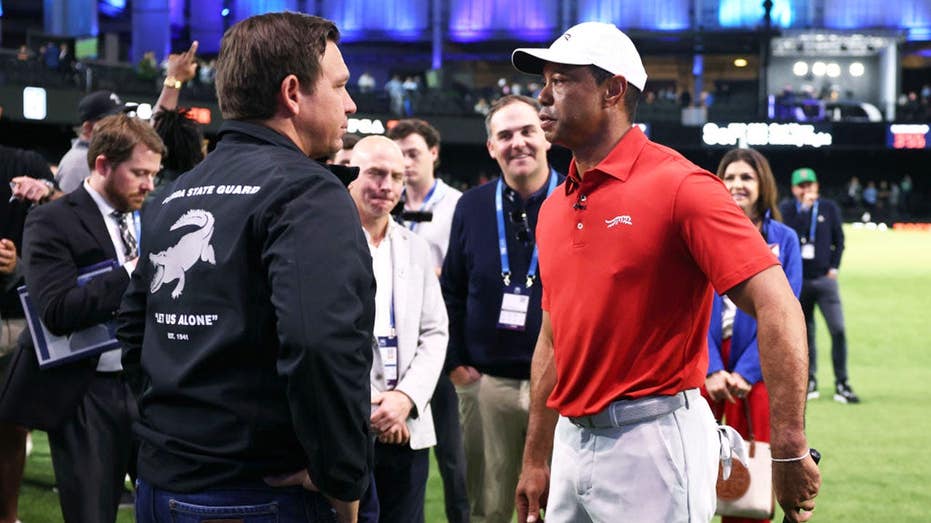
DeSantis Defends Tiger Woods, Announcer Cites 'Woke' Team Over Jena Sims' Dress
Governor Ron DeSantis defended Tiger Woods' license suspension, while an MLB announcer criticized a team's 'woke' stance and Jena Sims' dress.
Florida Governor Ron DeSantis has publicly commented on the case involving golfer Tiger Woods, whose driver's license was suspended for five years following a plea deal related to his March car crash. DeSantis' involvement brings a political dimension to a situation previously handled by the legal system.
The context for the governor's remarks appears to stem from broader discussions about legal proceedings and public figures, although the specific details of Woods' plea deal and the terms of his license suspension were not elaborated upon in the provided material.
Adding another layer to the sports and culture commentary, an MLB announcer reportedly called out a team for being "woke." This statement was made in conjunction with remarks about Jena Sims, who was noted for wearing a dress from the restaurant chain Chili's. The announcer's commentary linked these disparate elements, suggesting a critique of perceived "woke" culture within sports.
The implications of DeSantis' public statement are unclear, but it places him in the role of defending a prominent athlete. The announcer's comments, meanwhile, contribute to ongoing debates about the influence of social and political ideologies within professional sports leagues.
This event unfolds against a backdrop of various sports news items, including discussions about player trades, athlete statements, and controversies surrounding team and league decisions. The mention of Jena Sims' attire and the "woke" team critique suggests a commentary on perceived shifts in team branding or organizational values.
DeSantis' intervention in the Tiger Woods case might be interpreted as a broader political stance on legal outcomes for high-profile individuals. The specifics of the plea deal and the rationale behind the five-year license suspension remain central to understanding the full scope of the situation.
The announcer's critique of a "woke" team, coupled with the observation about Sims' dress, points to a cultural commentary that seeks to identify and challenge what the announcer perceives as overly progressive or sensitive stances within sports organizations.
Further details on the specific team or the context of the announcer's remarks would be needed to fully assess the impact and intent behind the commentary. The confluence of legal matters, political commentary, and cultural observations highlights the intersection of sports with wider societal discussions.
This article was written by AI based on publicly available news reporting. Original reporting by the linked source.