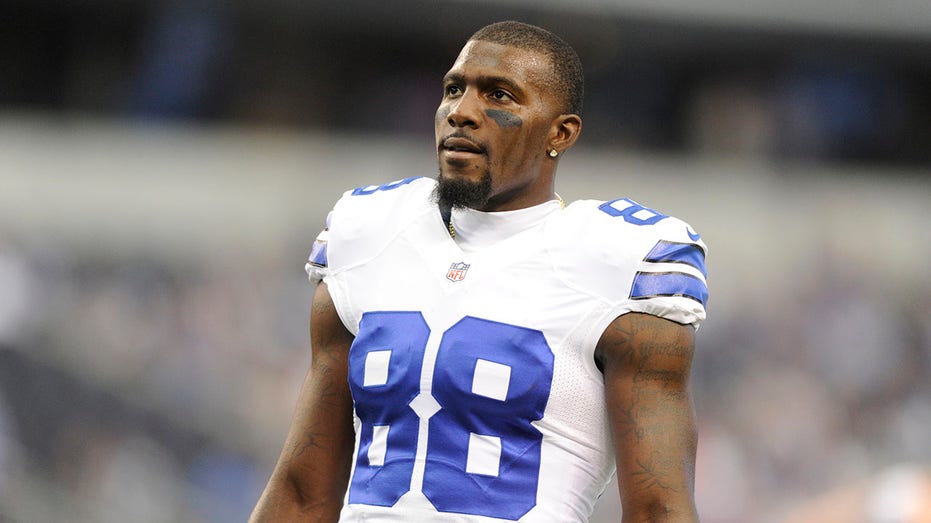
Dez Bryant Defends Jaxson Dart's Trump Introduction Amidst Criticism
Former NFL star Dez Bryant expressed confusion over the backlash Jaxson Dart received for introducing Donald Trump at a football event.
Former NFL wide receiver Dez Bryant has voiced his bewilderment regarding the criticism directed at college football player Jaxson Dart following an introduction of former President Donald Trump at a recent event.
Dart, the quarterback for Ole Miss, faced public scrutiny after introducing Trump at a rally in South Carolina. The incident sparked a range of reactions across social media and sports commentary circles.
Bryant, a Super Bowl champion with the Dallas Cowboys, stated that he does not understand the "hate" Dart has encountered. He suggested that the intensity of the negative response seemed disproportionate to the action itself, emphasizing his lack of comprehension regarding the controversy.
The quarterback's introduction of Trump occurred during a political rally, a setting that inherently draws strong opinions. As a public figure in college athletics, Dart's association with political events has drawn attention from fans, media, and political observers alike.
While the source material does not detail the specific nature of the criticism, it implies that the backlash stemmed from the political implications of Dart's involvement. In the realm of college sports, athletes often navigate the delicate balance between personal political views or associations and their public roles, which can influence public perception and fan engagement.
Bryant's comments add a notable voice from the professional sports world to the discussion surrounding Dart's actions. His perspective, coming from a former high-profile athlete, highlights the ongoing debate about the intersection of sports and politics, and how public figures in sports are perceived when engaging with political figures or events.
The situation underscores the heightened scrutiny that college athletes face, particularly those in prominent positions like starting quarterbacks. Their actions, both on and off the field, are often amplified and subject to widespread commentary, reflecting the broader societal discussions about political engagement and public influence.
As the dust settles on the incident, the conversation continues regarding the extent to which public figures, especially those in the sports arena, should engage with political matters, and how such engagements are interpreted by a diverse audience.
This article was written by AI based on publicly available news reporting. Original reporting by the linked source.