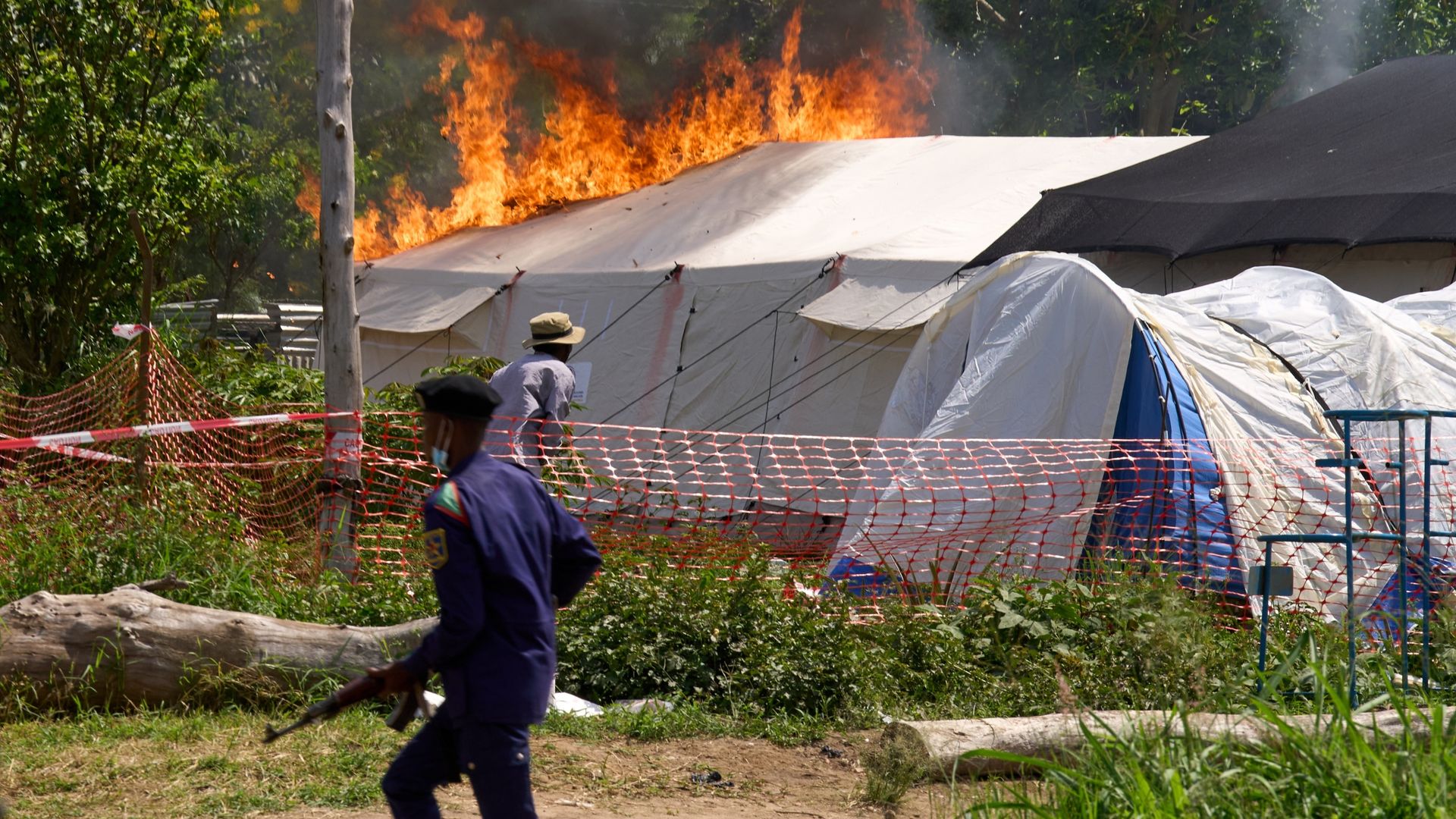
Ebola Outbreak Spreading as Crowd Burns DRC Treatment Centre
An Ebola treatment center in the DRC was set ablaze by a crowd, raising fears of a worsening outbreak and hindering containment efforts.
Fears are mounting that the Ebola outbreak in the Democratic Republic of Congo (DRC) is accelerating, exacerbated by an incident where an angry crowd set fire to a critical treatment center. The attack on the facility, a key node in the response to the deadly virus, has raised serious concerns about the ability to contain the escalating epidemic.
The destruction of the treatment center represents a significant setback for public health efforts in the region. These facilities are vital for isolating infected individuals, providing care, and preventing further transmission of the highly contagious disease. The attack not only destroys essential infrastructure but also undermines trust and cooperation between health workers and the local population, which is crucial for effective outbreak management.
While specific details regarding the crowd's motivations remain unclear, the incident highlights the complex challenges faced by health organizations operating in the DRC. Misinformation, fear, and mistrust can easily fuel hostility towards medical interventions, particularly in areas already experiencing instability or social unrest. The burning of the center will likely impede the tracing of contacts and the administration of life-saving treatments.
The immediate implication of this event is a potential increase in transmission rates, as the capacity to manage cases and implement control measures is diminished. The destruction of the facility means that resources and personnel will need to be redirected, potentially delaying crucial response activities and allowing the virus to spread more widely. This incident underscores the vulnerability of public health infrastructure in challenging environments.
Ebola outbreaks are notoriously difficult to control, requiring a multi-faceted approach that includes rapid case detection, contact tracing, safe burial practices, and community engagement. Attacks on health facilities can severely disrupt all these efforts. Health authorities have consistently stressed the importance of community acceptance and participation in combating the disease, making such acts of aggression particularly damaging.
Historically, responses to Ebola have often been hampered by logistical difficulties, security concerns, and sometimes, resistance from local populations who may be suspicious of outside interventions or misinformed about the nature of the disease and the treatments. The DRC has a long and difficult history with Ebola, having experienced numerous outbreaks over the past decades, each presenting unique challenges.
Experts have repeatedly warned that attacks on healthcare workers and facilities pose a grave threat to global health security. Such actions not only endanger those directly involved in the response but also have the potential to reignite outbreaks or cause them to spread across borders. International health organizations are likely to be reassessing their security protocols and community outreach strategies in light of this event.
Questions remain about how authorities will respond to the destruction of the treatment center, including efforts to rebuild or relocate the facility and how they plan to regain the trust of the affected community. The long-term impact on the ongoing Ebola response in the DRC and the broader region is yet to be fully understood.
This article was written by AI based on publicly available news reporting. Original reporting by the linked source.