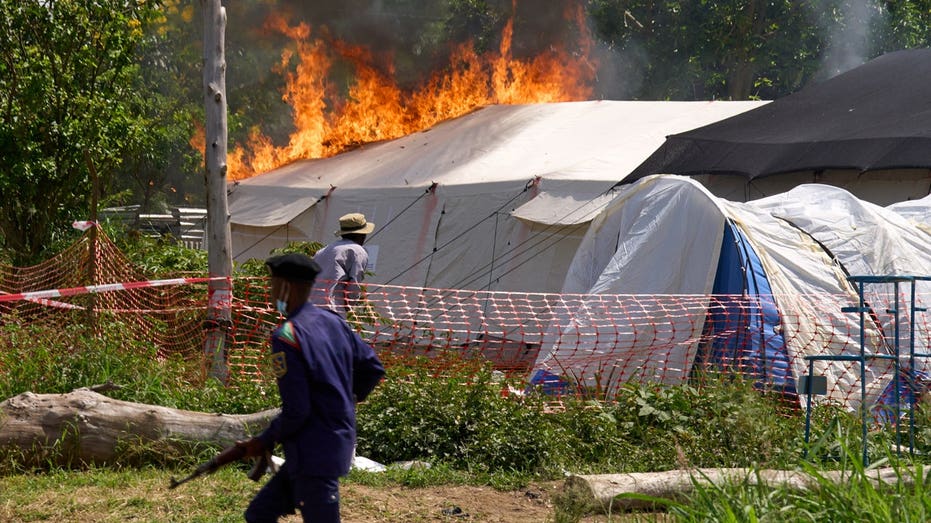
Ebola Treatment Center Torched in Congo After Clash Over Victim's Body
An Ebola treatment center in the Democratic Republic of Congo was set on fire following a dispute between residents and authorities over the retrieval of a deceased victim's body.
An Ebola treatment center in the Democratic Republic of Congo was engulfed in flames after residents clashed with authorities over the body of a victim who died from the virus. The incident occurred in Beni, a city that has been a focal point of recurring Ebola outbreaks.
The dispute reportedly began when local residents demanded to retrieve the body of the Ebola victim for traditional burial rites. However, health officials, adhering to strict protocols to prevent further transmission of the highly contagious disease, insisted on immediate and safe disposal of the remains. This disagreement escalated, leading to violent confrontations.
Witnesses described a chaotic scene as tensions between the community and the Ebola response teams reached a breaking point. The situation quickly deteriorated, culminating in the deliberate setting of the treatment facility ablaze. The exact circumstances leading to the fire, including who initiated it, remain under investigation, but the underlying cause was the community's resistance to Ebola containment measures.
The torching of the treatment center poses significant challenges to ongoing efforts to control the Ebola outbreak in the region. It not only destroys critical infrastructure but also undermines public trust and cooperation, which are vital for effective epidemic response. The destruction of the facility is likely to hamper the collection of data and the provision of care to infected individuals.
This event highlights the deep-seated mistrust and cultural sensitivities that often complicate public health interventions in affected communities. Traditional burial practices, which involve close contact with the deceased, are a major risk factor for Ebola transmission, as the virus can remain infectious in bodily fluids for some time after death. Health organizations have long struggled to balance the need for these safe practices with the cultural and religious beliefs of the populations they serve.
Health authorities have expressed grave concern over the incident, emphasizing the potential for increased transmission following the disruption of containment measures. The World Health Organization has previously noted the challenges posed by community resistance in containing Ebola outbreaks, particularly in areas with limited access to healthcare and pervasive misinformation.
Officials are now working to assess the damage and determine how to proceed with the response efforts in Beni. The immediate priority will be to ensure the safety of remaining health workers and to re-establish a secure environment for treatment and prevention activities. The incident also raises questions about the effectiveness of community engagement strategies in the fight against Ebola.
This incident is not the first time that Ebola response efforts have faced opposition in the Democratic Republic of Congo. Past outbreaks have been marked by attacks on health workers and the destruction of facilities, often fueled by rumors and a lack of understanding about the virus and the methods used to combat it. The long-term impact of this latest event on the trajectory of the current outbreak remains to be seen.
This article was written by AI based on publicly available news reporting. Original reporting by the linked source.