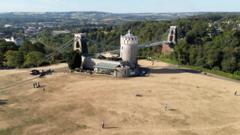
England Drought Expands: 71% Now Officially Dry
Over two-thirds of England declared drought status after driest July since 1836, impacting 45 million people.
More than two-thirds of England has officially been declared to be in drought, following the driest July since records began in 1836. The National Drought Group announced on Monday that the East Midlands, Lincolnshire and Northamptonshire, Kent and East Sussex, and Solent and the South Downs have moved into drought status. These areas join the half of England and the entirety of Wales that were already experiencing drought conditions.
The decision by the National Drought Group, comprising regulators, government officials, water companies, and agricultural bodies, comes after an exceptionally hot and dry summer. The current heatwave conditions are expected to persist for much of the week, with further high temperatures forecast. This prolonged dry spell has put immense strain on water resources and agricultural land across the country.
Approximately 45 million people in England are now living in areas designated as being in drought. Of these, more than 27 million are subject to water use restrictions aimed at conserving dwindling reserves. "Drought conditions will continue to worsen until significant and sustained rainfall," stated Tony Grayling, Chair of the National Drought Group. He added that "we need everyone's help in using a little less water to make sure our current water reserves last."
The implications of this widespread drought are significant, affecting not only daily water availability for millions but also posing serious risks to the environment and agriculture. The National Drought Group noted that most of England is experiencing "flash drought," a phenomenon characterized by rapid development due to low rainfall and high temperatures. Yorkshire and north-east England have been moved to "prolonged dry weather status," a precursor to drought conditions.
This situation follows a July that was exceptionally dry across England and Wales, with southern England recording its driest month ever. Some areas in south-east England received only 1% of their average rainfall for July. The continued hot weather also increases the risk of wildfires, with firefighters already battling a significant blaze in the New Forest.
The UK Health Security Agency has issued amber heat health alerts for most of England, warning of likely impacts on health and social care services due to the extreme temperatures. These alerts are in effect from Tuesday until Friday, underscoring the dual threat of heat and dryness.
While Scotland and Northern Ireland are not experiencing drought, they are expected to receive heavy rain. Scotland monitors water scarcity, and while conditions have improved in some areas, eastern regions still face moderate or significant scarcity.
Farmers have expressed concerns about the "real toll" the hot and dry weather is taking on their operations, anticipating long-lasting environmental impacts. The rapid onset of these drought conditions highlights the vulnerability of water systems to extreme weather events.
This article was written by AI based on publicly available news reporting. Original reporting by the linked source.