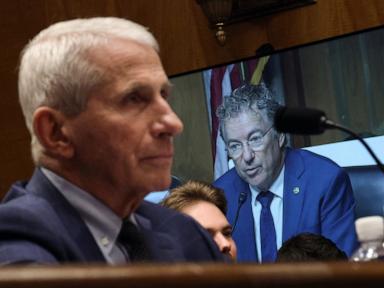
Fauci Invokes Fifth Amendment, Refuses Questions on COVID-19 Response
Dr. Anthony Fauci invoked his Fifth Amendment right, refusing to answer questions during a Senate hearing on the COVID-19 pandemic.
Dr. Anthony Fauci, a key figure in the United States' COVID-19 pandemic response, invoked his Fifth Amendment right against self-incrimination during testimony before a Senate committee on Wednesday, refusing to answer questions posed by lawmakers. The hearing, held by the Senate Homeland Security and Governmental Affairs Committee (HSGAC), focused on Fauci's handling of the pandemic.
Fauci, the former Director of the National Institute of Allergy and Infectious Diseases (NIAID), stated that he was invoking his constitutional right on the advice of his attorneys. He expressed regret over not being able to answer, citing his long record of cooperation with Congress and respect for the legislative branch. However, he specifically pointed to the committee's chairman, Republican Sen. Rand Paul of Kentucky, as a reason for his decision.
During his opening statement, Fauci detailed his reasons for invoking the Fifth Amendment, referencing Senator Paul's accusations of deception regarding the pandemic's origins and his alleged attempts to provoke legal action. Fauci accused Paul of releasing his unredacted personal diary with the intent to embarrass and intimidate him, concluding that the hearing's sole purpose was to elicit statements that would support Paul's calls for his prosecution and imprisonment.
Senator Paul's questioning primarily centered on Fauci's personal journal entries from December 2019 to December 2022 and the origins of the novel coronavirus. Despite the committee chairman's focus on these areas, Fauci declined to provide substantive answers, adhering to his invocation of the Fifth Amendment.
Fauci noted that he had testified or briefed congressional committees over 200 times during his 38-year tenure as NIAID director. This history of cooperation contrasted with his stance during Wednesday's hearing, underscoring the specific concerns he raised about Senator Paul's conduct and motivations.
The proceedings also saw a disruption involving one of Fauci's attorneys, David Schertler. When Schertler attempted to speak after Paul's questioning concluded, the senator refused to recognize him, citing that the attorney was not invited to testify and was being disruptive. Senator Paul warned Schertler that he could have him escorted from the premises, leading to Capitol Police eventually removing the attorney from the room.
The committee's focus on Fauci's diary entries and the pandemic's origins reflects ongoing scrutiny and debate surrounding the government's response to the global health crisis. Fauci's invocation of the Fifth Amendment adds a significant legal dimension to these discussions, potentially limiting the information available to the public and lawmakers.
With Fauci declining to answer specific questions, the hearing left many of the committee's inquiries regarding his personal records and pandemic decision-making unresolved. The implications of this stance for future investigations or public understanding of the pandemic's early stages remain to be seen.
This article was written by AI based on publicly available news reporting. Original reporting by the linked source.