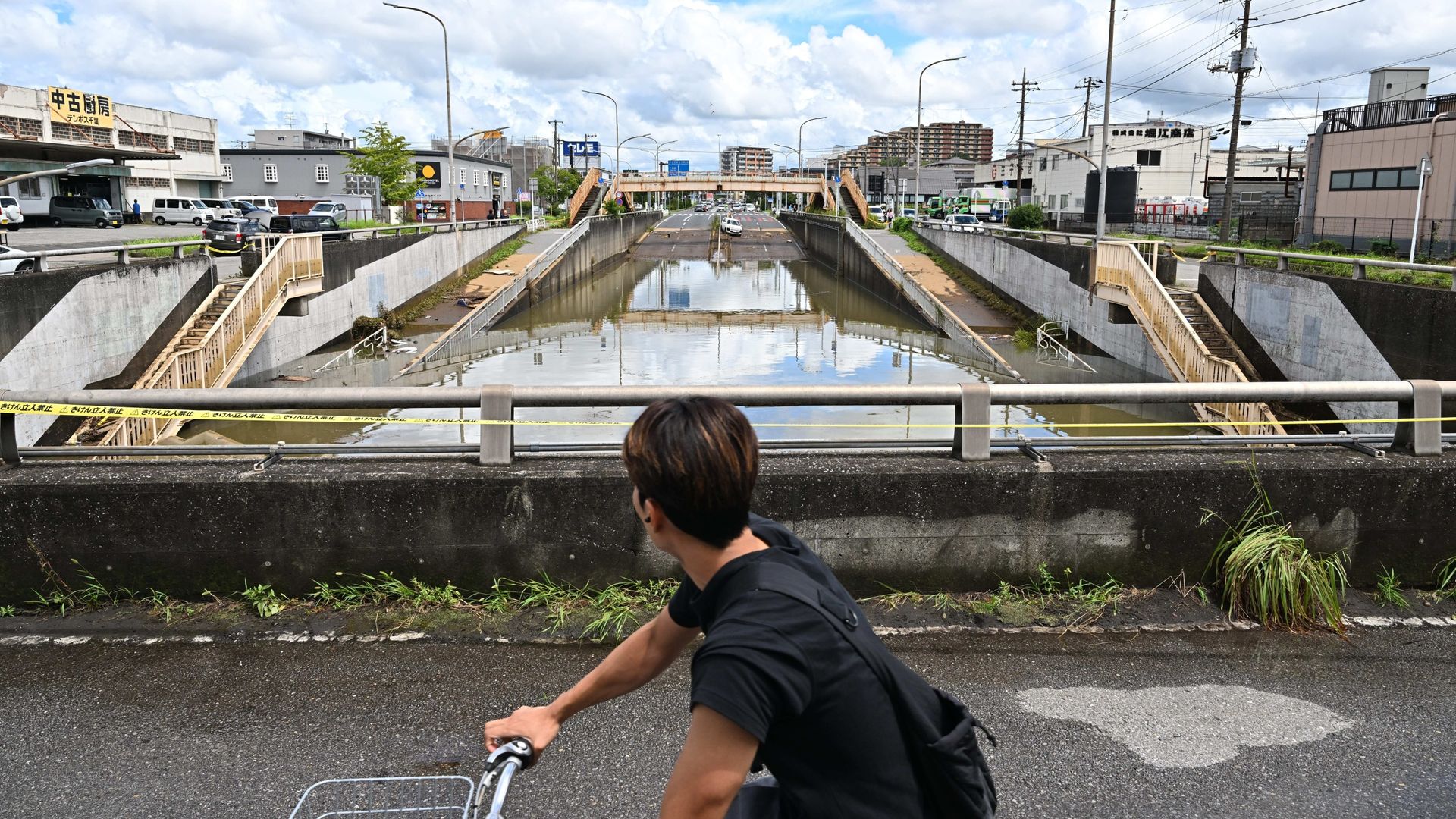
Five Dead in Japan as Record Rainfall Triggers Widespread Flooding
Five people have died in Japan following record-breaking rainfall that caused severe flooding and left thousands stranded.
Five individuals have lost their lives in Japan as torrential rain, described as record-breaking, unleashed severe flooding across several regions, leaving thousands of residents stranded.
The downpours, which intensified over the weekend, overwhelmed rivers and drainage systems, leading to widespread inundation of homes and infrastructure. The affected areas experienced unprecedented levels of precipitation in a short period, overwhelming local authorities' capacity to respond.
Emergency services have been working around the clock to rescue those trapped by rising waters. Reports indicate that evacuation orders were issued for a significant number of residents, but many were unable to reach safety due to the rapid escalation of the floods. The casualties are believed to have occurred due to drowning and landslides triggered by the saturated ground.
The full extent of the damage is still being assessed, but initial reports suggest substantial destruction to property and public utilities. The government has pledged to provide assistance to the affected communities and is mobilizing disaster relief efforts.
This extreme weather event highlights Japan's vulnerability to natural disasters, particularly in light of climate change, which is predicted to increase the frequency and intensity of such phenomena. The country has a history of dealing with typhoons and heavy rainfall, but the scale of this event has surprised meteorologists and officials alike.
Local media has shown images of submerged roads, collapsed bridges, and residents being evacuated by boat. The economic impact is expected to be significant, with disruptions to transportation networks and agricultural lands likely to cause considerable losses.
Authorities are urging residents in unaffected areas to remain vigilant and to follow safety guidelines. The focus now is on search and rescue operations, providing shelter and aid to those displaced, and beginning the long process of recovery and rebuilding.
Further rainfall is forecast for some regions, raising concerns about potential secondary impacts, such as further landslides and the contamination of water sources. The long-term implications for disaster preparedness and infrastructure resilience are likely to be debated in the coming months.
This article was written by AI based on publicly available news reporting. Original reporting by the linked source.