Magnitude 7.1 Quake Hits Southern Japan, Triggering Tsunami Advisory
A powerful 7.1 magnitude earthquake struck southern Japan, leading to a tsunami advisory for coastal areas and widespread power outages.
A magnitude 7.1 earthquake violently shook southern Japan on Tuesday afternoon, prompting the Japan Meteorological Agency to issue a tsunami advisory for the Ariake Sea and Yatsushiro Sea coastlines. The powerful tremor, occurring at approximately 4:30 p.m. local time, struck the Kumamoto Prefecture on Kyushu island.
The earthquake's epicenter was located about six miles beneath the surface of Kyushu, the southernmost of Japan's main islands, according to data from the U.S. Geological Survey and local meteorological officials. The shaking reportedly lasted for about a minute, with broadcasts from Japan's NHK news showing images of potential smoke or fire in the vicinity of the quake.
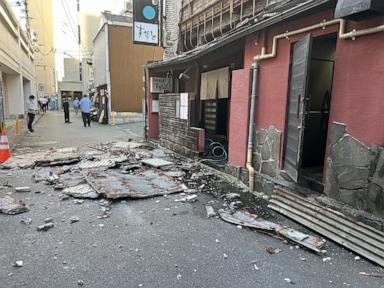
Following the earthquake, Kumamoto Airport suspended all flights, as announced on its official website. Initial reports indicated that several thousand homes were left without power. Images from Kumamoto City showed the exterior wall of a shop had collapsed due to the seismic activity.
Officials urged residents to stay away from the ocean and shorelines and issued warnings about the potential for landslides. Japanese Prime Minister Sanae Takaichi confirmed that strong shaking was felt in the city of Uki and the town of Hikawa. She cautioned that tsunami waves of approximately one meter, or just over three feet, could affect the Ariake and Yatsushiro seas.
In an emergency update, Japan's Nuclear Regulation Authority stated that no abnormalities were detected at nearby nuclear facilities, including those in Ikata, Genkai, and Satsumasendai City. The prime minister emphasized the need for vigilance, advising residents in strongly shaken areas to be prepared for the possibility of further earthquakes of similar magnitude.
The advisory from the Japan Meteorological Agency highlighted the immediate concern for coastal communities, urging them to heed warnings and prepare for potential tsunami impacts. The agency's guidance focused on the immediate coastal areas where advisory levels were issued.
Reports from NHK news detailed the extent of the power outages, affecting thousands of households. The collapsed shop wall in Kumamoto City served as a stark visual representation of the quake's intensity and the damage it inflicted on local infrastructure.
This event underscores Japan's ongoing vulnerability to seismic activity, given its location on the Pacific Ring of Fire. Authorities are continuing to assess the full extent of the damage and monitor seismic activity in the region.
This article was written by AI based on publicly available news reporting. Original reporting by the linked source.