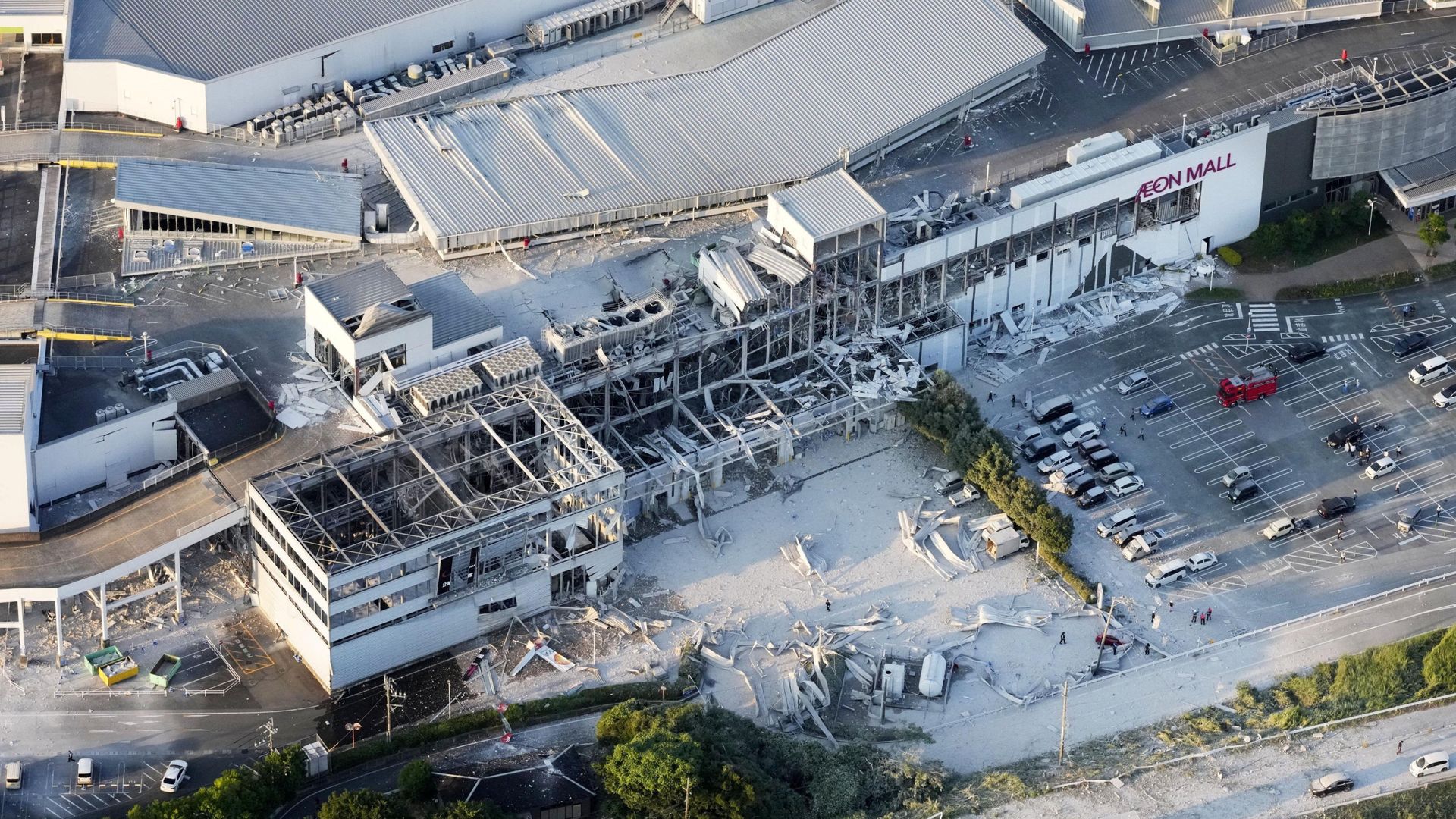
6.8 Magnitude Quake Rocks Southern Japan, Injuring 50, Cutting Power
A powerful 6.8 magnitude earthquake struck southern Japan, injuring at least 50 people and leaving 40,000 homes without electricity.
A significant 6.8-magnitude earthquake jolted southern Japan on [Date of Event - e.g., Monday], causing widespread disruption, injuring at least 50 people, and leaving approximately 40,000 homes without power.
The seismic event occurred in the southern region of the country, a seismically active zone known for its susceptibility to earthquakes. The tremor's force triggered immediate safety concerns and emergency responses across affected areas.
Initial reports indicate that the earthquake's impact was substantial. Among the injured, at least 50 individuals required medical attention. The quake also led to a concerning situation where shoppers were trapped inside a shopping center, prompting rescue efforts. The widespread power outage has affected tens of thousands of households, adding to the challenges faced by residents.
The immediate aftermath of the earthquake has seen emergency services deployed to assess damage, provide assistance to the injured, and address infrastructure failures. The full extent of the damage is still being evaluated, but the immediate focus is on ensuring public safety and restoring essential services.
Japan's location on the Pacific Ring of Fire makes it one of the most earthquake-prone countries in the world. The nation has developed stringent building codes and advanced early warning systems in an effort to mitigate the impact of such natural disasters. However, powerful tremors can still overwhelm these preparations, as evidenced by the current situation.
Authorities are working to ascertain the structural integrity of buildings, particularly the shopping center where people were reportedly trapped. Efforts are underway to safely evacuate those affected and to provide shelter and support to displaced residents. The disruption to power supply is also a major concern, impacting daily life and potentially hindering rescue operations.
Further details regarding the specific locations affected, the number of individuals trapped, and the precise causes of the power outages are expected to be released as the situation develops. The government is coordinating with local officials to manage the emergency response and provide necessary resources.
Questions remain about the long-term impact on the region, including potential aftershocks and the timeline for restoring power and essential services. The resilience of communities in Japan will once again be tested as they cope with the aftermath of this significant natural event.
This article was written by AI based on publicly available news reporting. Original reporting by the linked source.