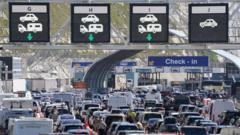
France Halts Extra EU Border Checks at Dover Amidst Holiday Chaos
France suspended enhanced EU border checks at Dover, easing lengthy queues and travel delays for thousands of holidaymakers.
French authorities have suspended additional European Union border checks at the port of Dover, following hours-long queues and significant delays for thousands of holidaymakers. The move is intended to alleviate congestion at the terminal and on surrounding roads, particularly as travelers navigate soaring temperatures during peak travel periods.
The port authorities had escalated the challenging situation with border officials, leading to the suspension of the enhanced checks. Earlier in the day, travelers faced up to two hours of delay reaching the port and an additional two and a half hours for processing within the terminal on Saturday morning. By lunchtime, processing times had reduced to under an hour, and by early afternoon, traffic was reported as free-flowing.
The extra checks are linked to the European Union's new digital Entry/Exit System (EES), which mandates biometric data collection, including fingerprinting and facial scanning, for non-EU travelers. Although the full EES system is not yet operational at Dover, border officials were undertaking manual data entry, contributing to the extended wait times this weekend. Conventional border checks remain in place.
The suspension of these additional measures is expected to help manage the flow of traffic as the busy May bank holiday weekend continues. The EES system is slated for implementation at all 29 participating Schengen Area border crossings. The Port of Dover has stated that passengers who miss their ferry due to waiting times will be accommodated on the next available crossing.
Doug Bannister, CEO of the Port of Dover, indicated that the port anticipated over 8,000 cars passing through on Saturday. He noted that 84 kiosks had been installed to handle the anticipated volumes efficiently once the new digital system is fully active. Despite assurances from government and French authorities regarding the system's implementation, Bannister expressed frustration over the slow processing observed on Saturday morning.
LeShuttle, the operator of the Channel Tunnel service, also reported delays of approximately one and a half hours for train services between Folkestone and Calais, citing longer processing times at the border. These delays highlight the significant logistical challenges posed by new border control measures during periods of high passenger volume.
The situation underscores the complexities of implementing new border technologies and protocols, especially during critical travel seasons. The effectiveness and efficiency of the EES system, once fully deployed, will be closely watched by both travelers and port authorities across the Schengen Area.
Further updates on the status of border checks and travel conditions at Dover are expected as the weekend progresses.
This article was written by AI based on publicly available news reporting. Original reporting by the linked source.