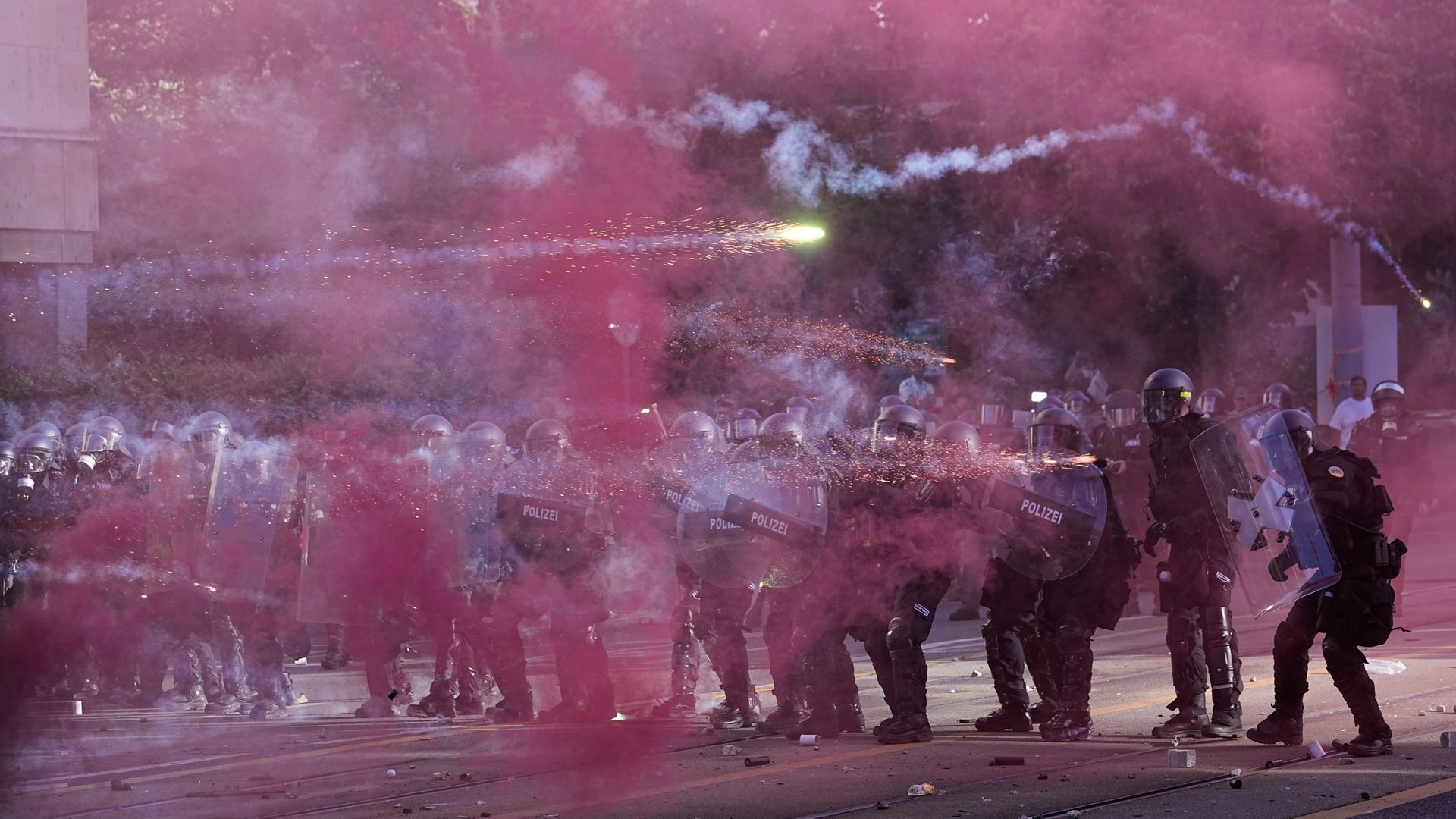
Geneva Police Clash with Anti-G7 Protesters, Tesla Set Ablaze
Geneva police used tear gas and water cannons against anti-G7 protesters who set a Tesla ablaze and vandalized a UN agency.
Police in Geneva deployed tear gas and water cannons on Sunday to disperse protesters demonstrating ahead of the Group of Seven (G7) summit. The clashes occurred as demonstrators targeted symbols of global capitalism and international institutions.
The protests, which took place in Geneva, Switzerland, reflect broader discontent with the G7, an intergovernmental political forum consisting of Canada, France, Germany, Italy, Japan, the United Kingdom, and the United States. The summit is scheduled to begin Monday in Biarritz, France.
During the demonstrations, protesters reportedly set fire to a Tesla electric vehicle and caused damage to a United Nations agency building, smashing its windows. The actions underscore the volatile nature of protests against major international gatherings.
The use of force by Geneva police highlights the security challenges faced by authorities managing large-scale demonstrations. The events raise questions about the effectiveness of protest management and the potential for escalation during high-profile international events.
This incident is not isolated; similar protests have accompanied previous G7 summits, often drawing attention to issues such as climate change, economic inequality, and corporate influence. The targeting of a UN agency suggests a critique extending beyond the G7 nations to the broader international governance system.
While the source material does not provide specific numbers of arrests or injuries, the deployment of crowd control measures like tear gas and water cannons indicates a significant confrontation between law enforcement and protesters.
Experts on social movements often note that such disruptive tactics by a segment of protesters can serve to draw media attention, though they can also alienate potential supporters and lead to harsher crackdowns by authorities.
The full implications of these clashes for the G7 summit itself remain to be seen, but they serve as a stark reminder of the global dissent that often accompanies such high-level meetings.
This article was written by AI based on publicly available news reporting. Original reporting by the linked source.