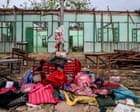
Global school attacks surge 40%, with 10,600 students and staff harmed
Violent attacks on schools worldwide increased by 40% in 2024-2025, harming over 10,600 students and staff, a new study reveals.
Violent attacks on schools, pupils, and staff globally have surged by 40%, with more than 8,556 recorded incidents and at least 10,600 students and staff killed, injured, abducted, arrested, or otherwise harmed during 2024 and 2025. The alarming figures come from new research conducted by the Global Coalition to Protect Education from Attack (GCPEA), highlighting a significant rise in threats to educational environments worldwide.
These attacks were reported across 83 countries, underscoring the widespread nature of the crisis. The highest incidences were recorded in Colombia, the Democratic Republic of the Congo, Ethiopia, Haiti, Palestine, and Ukraine. The report serves as a stark warning about the erosion of global norms designed to protect children and education, suggesting a dangerous shift where even the youngest are no longer considered off-limits.
Key details from the study indicate that cases of military forces or armed groups occupying schools or universities nearly doubled, with 1,912 recorded instances over the two-year period. Lisa Chung Bender, director of GCPEA, emphasized the gravity of the findings, stating that the report's findings sound the alarm about the threat to education and serve as a warning that global norms protecting children are collapsing.
The implications of these attacks are profound, threatening not only the immediate safety of students and educators but also the long-term stability and development of communities. The disruption of education can have lasting consequences, hindering economic progress and perpetuating cycles of violence. Experts warn that if these trends are not addressed, the world risks reaching a point where the protection of education can no longer be regained.
Further analysis reveals that the highest numbers of victims were concentrated in Myanmar, Nigeria, Yemen, and Cameroon, where more than 1,700 students and staff were killed or injured in total. In Nigeria alone, over 700 students and staff were reportedly kidnapped. Myanmar saw at least 80 students and staff killed and approximately 240 injured, illustrating the severe human cost.
The report also highlighted specific regional impacts. Ukraine experienced around 900 attacks on schools, while Palestine recorded at least 2,400 attacks on students and staff, indicating particularly severe situations in these conflict zones. The occupation of educational facilities by armed actors is a critical concern, as it directly impedes learning and exposes students to further danger.
Prof Tejendra Pherali, a professor specializing in education and international development, commented on the broader context, noting that such attacks are often linked to ongoing conflicts and political instability. He stressed the importance of accountability for perpetrators and the need for stronger international mechanisms to protect educational institutions and ensure continuity of learning during crises.
Unresolved questions remain regarding the specific motivations behind the surge in attacks and the effectiveness of current international protection frameworks. The GCPEA report calls for renewed commitment from governments and international bodies to uphold the principles of protecting education and to implement concrete measures to prevent future attacks and support affected communities.
This article was written by AI based on publicly available news reporting. Original reporting by the linked source.