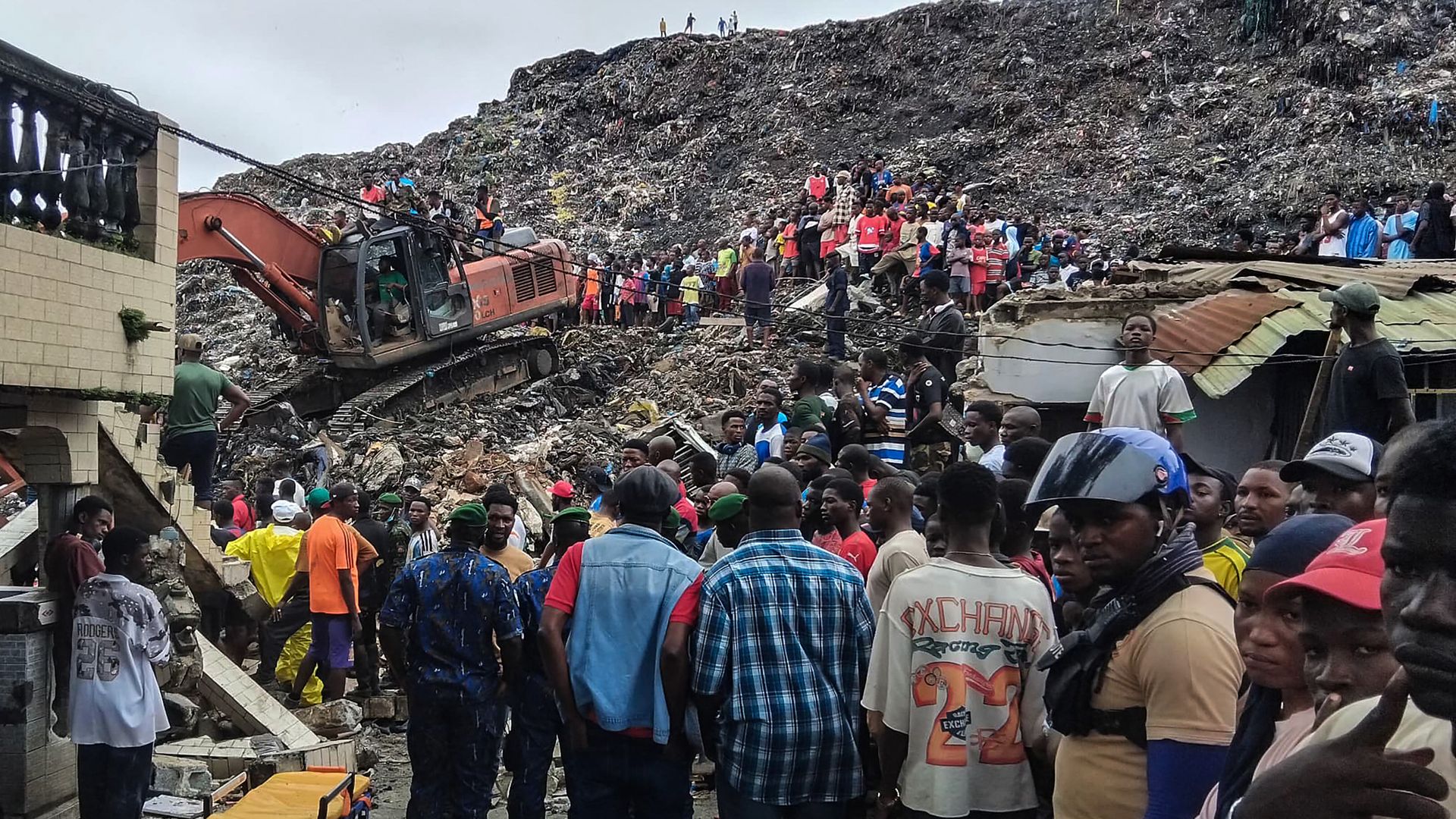
Guinea Landslide: 30 Dead as Waste Mound Collapses on Homes
A catastrophic landslide at a Guinea landfill buried homes under waste, killing 30 people.
A devastating landslide at a waste site in Guinea has claimed the lives of at least 30 people. The disaster occurred when a large mound of rubbish collapsed, engulfing nearby residential homes.
The incident highlights the precarious living conditions for many in the vicinity of informal waste disposal sites, often situated in densely populated urban or peri-urban areas. These sites can accumulate vast quantities of waste, creating unstable structures prone to collapse, especially during periods of heavy rainfall.
Emergency services were mobilized to the scene following the collapse, which occurred in an area where residents live in close proximity to the landfill. Initial reports indicate that the sheer volume of waste that gave way trapped residents inside their homes, leading to the significant death toll.
The immediate aftermath saw rescue efforts underway, with authorities and community members working to search for survivors and recover bodies. The scale of the tragedy underscores the urgent need for improved waste management strategies and safer living conditions for vulnerable populations.
Landslides at waste dumps, often referred to as "tip slides," are a known hazard globally. They can be triggered by factors such as the accumulation of organic waste, which generates heat and gas, or by saturation from rainfall, which reduces the stability of the waste mass. The steep slopes of poorly managed landfills exacerbate this risk.
While specific details regarding the exact cause and the duration of the landfill's operation in this particular location have not been fully disclosed, such incidents often occur in areas where waste is not properly engineered or contained. The lack of formal planning and safety measures at informal or poorly regulated sites contributes to these predictable yet devastating events.
Reactions from local officials and international aid organizations are expected as the full extent of the disaster becomes clearer. Investigations into the safety protocols at the landfill are likely to follow, with a focus on preventing future occurrences. The long-term implications include the potential displacement of survivors and the need for humanitarian assistance.
Questions remain about the oversight of waste disposal sites in Guinea and the measures in place to protect communities living nearby. This tragedy serves as a stark reminder of the environmental and human cost associated with inadequate waste management infrastructure.
This article was written by AI based on publicly available news reporting. Original reporting by the linked source.