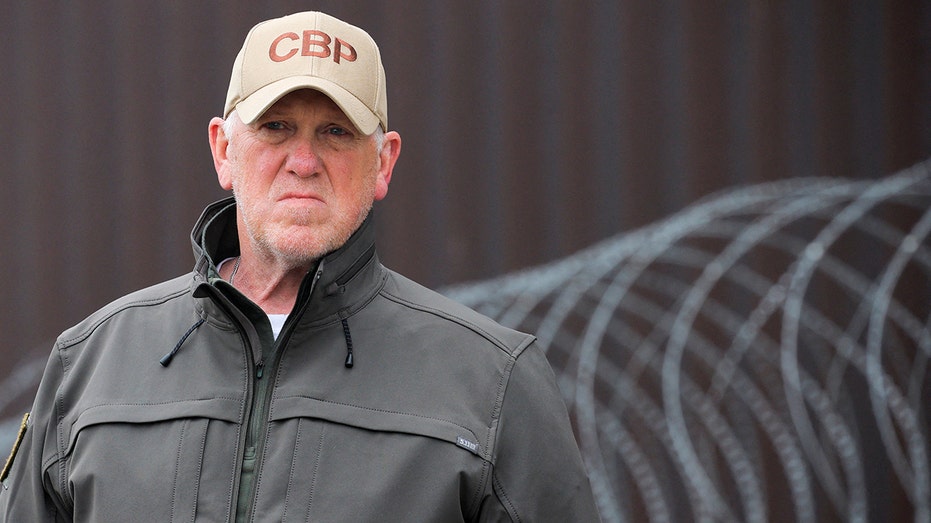
Homan recounts border horrors, criticizes media coverage
Former ICE director Mark Homan described graphic border enforcement scenes and criticized media portrayal of the crisis.
Former Immigration and Customs Enforcement (ICE) Director Mark Homan has shared harrowing accounts from his career in border enforcement, detailing what he described as horrific scenes and criticizing the media's coverage of the ongoing border crisis.
Homan, who served as ICE director under the Trump administration, spoke about his experiences in a recent interview, highlighting the extreme conditions faced by migrants and the challenges encountered by law enforcement. He asserted that the reality on the ground is far more severe than often portrayed in public discourse and media reports.
During his tenure, Homan stated that agents frequently encountered individuals in dire medical distress. He recounted instances where migrants, particularly children, were found in critical condition due to dehydration and heat exposure, describing some as being "baked to death." These accounts underscore the dangerous journeys undertaken by those attempting to cross the border.
Homan’s remarks suggest a deep dissatisfaction with how the border situation is communicated to the public. He implied that the media often fails to capture the full scope of the humanitarian and security issues at the border, leading to a public perception that does not align with the on-the-ground realities he witnessed.
The former director's decision to speak out now, after leaving his government position, brings renewed attention to the complexities of border security and immigration. His candid descriptions aim to provide a stark counter-narrative to what he perceives as a sanitized or incomplete media portrayal.
These graphic recollections serve as a stark reminder of the human cost associated with irregular migration and the immense pressure placed on border agencies. Homan's comments are likely to fuel further debate about immigration policies and the responsibilities of both governments and media outlets in reporting on such sensitive issues.
His criticisms also point to a broader tension between official accounts of border operations and public reporting. The experiences shared by Homan suggest a gap in understanding that he hopes to bridge through his public statements, urging a more comprehensive and unflinching look at the border crisis.
The implications of Homan's testimony extend to policy discussions, potentially influencing public opinion and political discourse surrounding border security and immigration reform. His willingness to share such visceral details signals a desire for greater accountability and a more accurate representation of the challenges at the U.S. southern border.
This article was written by AI based on publicly available news reporting. Original reporting by the linked source.