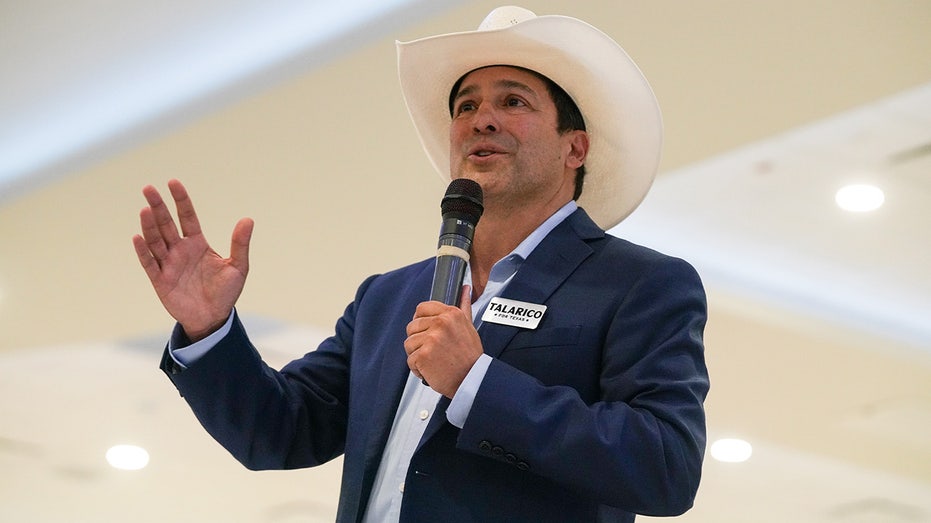
House Hopeful Defended Graphic Music Video Amid Congressional Campaign
A Democratic House hopeful defended a controversial music video featuring graphic violence, sparking outrage during his campaign.
A Democratic candidate running for a House seat has drawn significant criticism for his past defense of a music video depicting graphic violence, including sexual assault and murder. The controversy surrounding the video, released years before his current political aspirations, has cast a shadow over his campaign.
The video in question, associated with the artist Gerardo Ortiz, has been widely condemned for its violent and disturbing imagery. Critics argue that the candidate's prior defense of such content is incompatible with public service and raises serious questions about his judgment and values.
During his campaign, the candidate has faced calls to address his past remarks and stance on the controversial video. He has reportedly defended his position by emphasizing artistic expression and the separation of art from personal views, though these explanations have done little to quell the public outcry.
The implications of this controversy extend beyond the candidate's personal reputation. It raises broader questions about the vetting process for political candidates and the standards voters expect from those seeking to represent them in Congress. The incident highlights the challenges candidates face as past actions and associations are scrutinized in the digital age.
This is not the first time artistic content has become a political flashpoint. Similar controversies have erupted in the past, involving musicians and public figures whose work has been deemed offensive or harmful. The debate often centers on where to draw the line between freedom of expression and the potential for art to incite or normalize violence.
Supporters of the candidate have attempted to shift focus to his policy positions and qualifications for office, arguing that his past associations should not disqualify him. However, opponents continue to highlight the graphic nature of the video and the candidate's defense of it as evidence of a lack of fitness for public trust.
Political analysts suggest that such controversies can significantly impact election outcomes, particularly in closely contested races. The attention drawn by the video defense could mobilize voters on both sides of the issue and influence undecided voters.
As the election approaches, the candidate faces continued pressure to provide a more satisfactory explanation or to distance himself from the controversial content. The outcome of this situation remains uncertain, with potential ramifications for his campaign and the broader political discourse surrounding art, violence, and public responsibility.
This article was written by AI based on publicly available news reporting. Original reporting by the linked source.