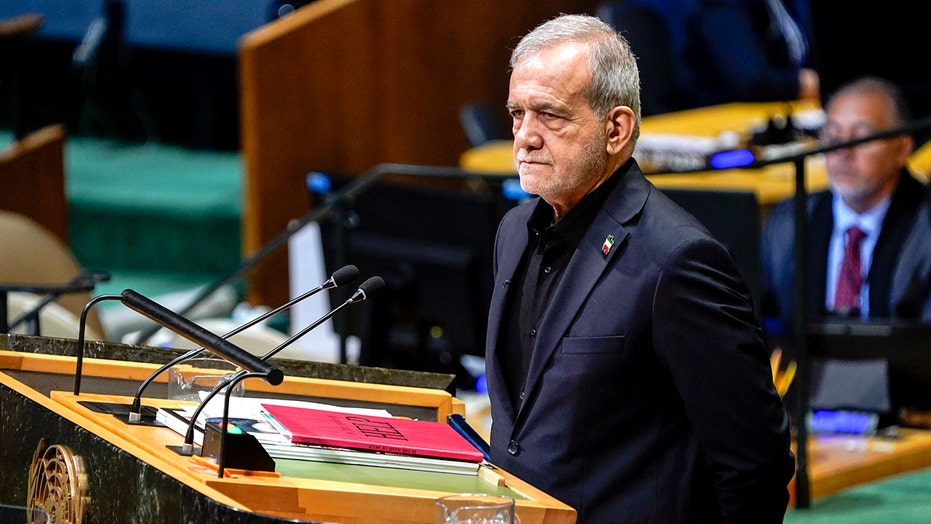
Iran President Denies Nuclear Ambitions, Blames US for Mideast Conflict
Iranian President denies nuclear program aims, accusing the US of fueling Middle East conflict and instability.
Iranian President Ebrahim Raisi has denied that his country harbors nuclear ambitions, while simultaneously accusing the United States of exacerbating conflicts in the Middle East. Raisi's statements come amid ongoing international scrutiny of Iran's nuclear program and persistent regional tensions.
These remarks highlight the complex geopolitical landscape of the Middle East, where Iran's actions and its relationships with global powers, particularly the United States, are central to discussions on regional security and stability. Raisi's administration has consistently maintained that its nuclear activities are for peaceful purposes, a claim that international observers and Western governments have largely viewed with skepticism.
The Iranian President's accusations against the U.S. point to a broader narrative promoted by Tehran, which often frames American foreign policy as a destabilizing force in the region. This perspective suggests that U.S. alliances and military presence contribute to, rather than alleviate, conflicts.
The implications of Raisi's dual message are significant. By denying nuclear aspirations, he aims to deflect international pressure and potential sanctions. By blaming the U.S. for regional instability, he seeks to rally domestic support and position Iran as a victim of foreign interference, potentially influencing regional diplomatic efforts and international perceptions.
Iran's nuclear program has been a subject of intense international debate for decades, with concerns often revolving around its potential to develop nuclear weapons. The Joint Comprehensive Plan of Action (JCPOA), a landmark deal aimed at curbing Iran's nuclear activities in exchange for sanctions relief, has been in a precarious state, further complicating the situation.
Raisi's administration has faced considerable domestic and international pressure regarding its nuclear program and its role in regional conflicts, including its support for various militant groups. These accusations against the U.S. are part of a long-standing rhetorical strategy employed by Iranian leadership.
International bodies, including the International Atomic Energy Agency (IAEA), continue to monitor Iran's nuclear activities closely. Reports from the agency often detail Iran's compliance, or lack thereof, with international safeguards, providing crucial data points in the ongoing debate.
As the situation evolves, unanswered questions remain about Iran's true intentions regarding its nuclear program and the future trajectory of U.S.-Iran relations. The effectiveness of Raisi's diplomatic messaging, both domestically and internationally, will be a key factor in shaping regional dynamics.
This article was written by AI based on publicly available news reporting. Original reporting by the linked source.