Israel, Lebanon Agree Ceasefire Contingent on Hezbollah Attacks Stopping
Israel and Lebanon agreed to a potential ceasefire and security zones in Lebanon if Hezbollah halts attacks.
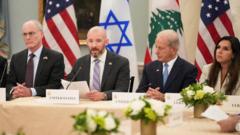
Israel and Lebanon have reached an agreement to implement a ceasefire and establish pilot security zones within Lebanon, contingent upon the complete cessation of attacks by the Iran-backed group Hezbollah. The announcement came from the U.S. State Department following two days of U.S.-mediated talks in Washington between Lebanese and Israeli representatives.
A joint statement indicated that the agreement also requires the evacuation of Hezbollah operatives from an area between the Israeli border and the Litani River, a region currently occupied by Israeli ground forces. The United States has pledged to assist in guiding the creation of these pilot zones, where the Lebanese Armed Forces would assume exclusive control, excluding all non-state actors.
The breakthrough follows recent escalations, including Israeli strikes that killed at least nine people in southern Lebanon and rocket fire from Hezbollah into northern Israel. Lebanese state media reported continued Israeli strikes on Thursday, with at least one resulting in casualties. Hezbollah, a powerful Shia militia and political entity supported by Iran, possesses an armed force considered more formidable than the Lebanese army.
This accord builds upon a partial ceasefire announced earlier in the week, where Lebanon stated Israel would refrain from bombing Beirut in exchange for Hezbollah not targeting Israel. The agreement explicitly rejected any attempts by states or non-state actors to "hold Lebanon's future hostage."
Details regarding the precise locations of the pilot zones or their operational mechanisms were not provided in the initial announcement. The agreement specifies that representatives from both countries will reconvene on June 22 for further discussions aimed at achieving a comprehensive resolution.
Hezbollah has indicated it will issue an official statement on the matter in due course. The agreement has already drawn criticism from some Israeli officials. Far-right Israeli National Security Minister Itamar Ben-Gvir reportedly described the arrangement as a "serious mistake."
Israel and Hezbollah have engaged in numerous conflicts over the years, with Hezbollah designated as a terrorist organization by Israel and several other nations, including the United States and the United Kingdom. The group's significant military capacity and political influence within Lebanon make its role central to regional security dynamics.
The U.S. mediation effort highlights the ongoing international push to de-escalate tensions in the region and establish a more stable security framework along the Israeli-Lebanese border, though the success of the agreement ultimately hinges on Hezbollah's adherence to the conditions set forth.
This article was written by AI based on publicly available news reporting. Original reporting by the linked source.