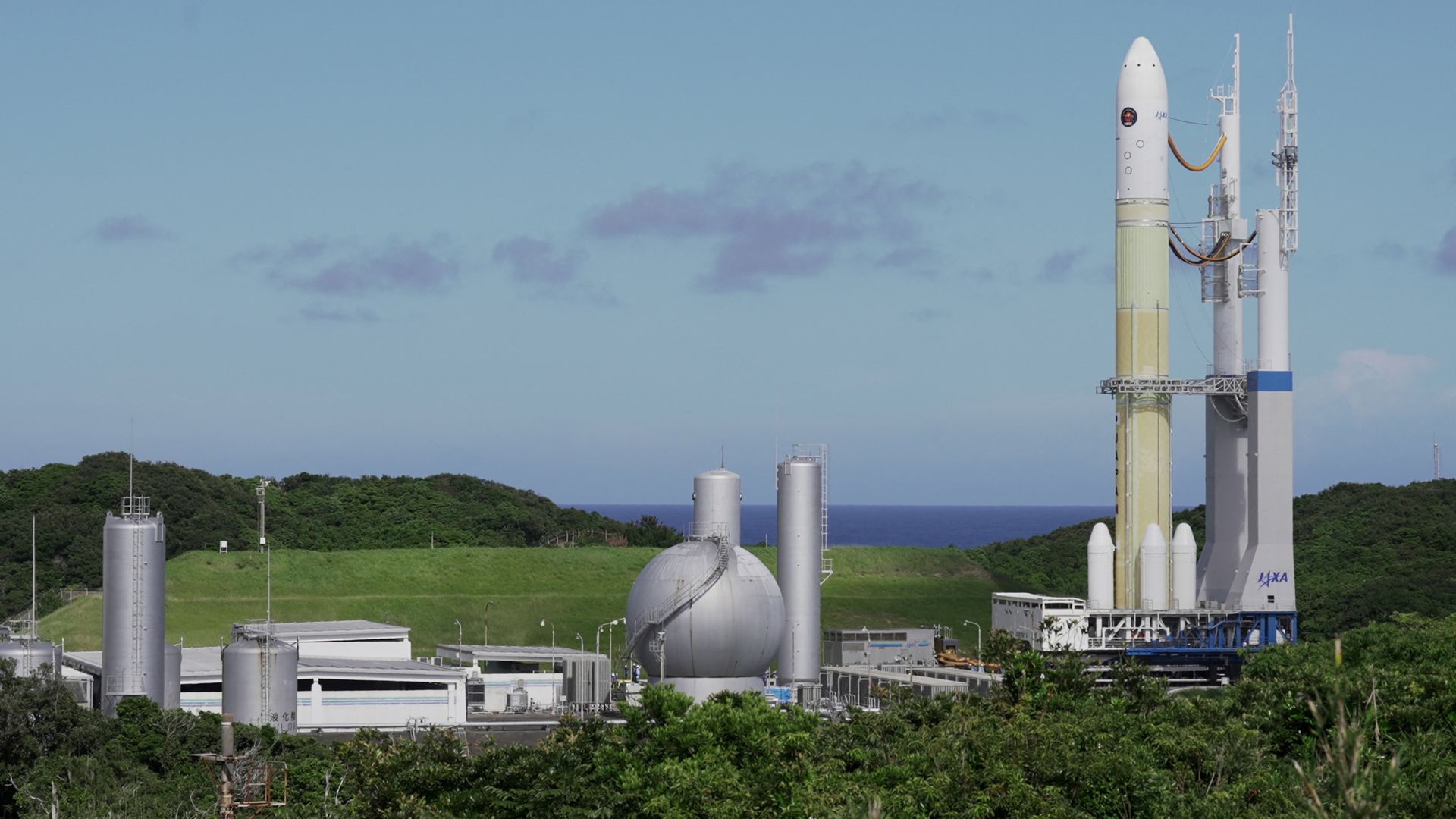
Japan Launches Mars Mission to Retrieve Samples from Martian Moon
Japan's MMX spacecraft has begun its journey to Mars to collect samples from Phobos, its largest moon, a historic first.
Japan has officially launched its groundbreaking mission to Mars, aiming to collect samples from Phobos, the largest of the planet's two moons. The spacecraft, known as the Martian Moons eXploration (MMX) mission, departed Earth on Tuesday, embarking on a multi-year journey that could revolutionize our understanding of the Red Planet and its celestial neighbors.
The MMX mission represents a significant step forward in planetary science and international space exploration. Phobos and its smaller sibling, Deimos, are thought to be captured asteroids, offering clues to the early history of the solar system. By bringing samples back to Earth for detailed analysis, scientists hope to unlock secrets about the formation of Mars and the origins of these enigmatic moons.
During its mission, the MMX spacecraft will orbit Mars and then descend to Phobos. It is designed to land on the moon's surface, collect material, and then return to Earth, a complex feat of engineering and navigation. This ambitious undertaking is being led by the Japan Aerospace Exploration Agency (JAXA).
The successful retrieval of Martian moon samples would be a first for any nation, providing invaluable scientific data that cannot be obtained through remote observation or even robotic exploration on the surface. The samples could shed light on the composition of the Martian system and potentially reveal details about the conditions under which planets formed.
This mission is not just about scientific discovery; it also highlights Japan's growing capabilities in deep space exploration. Following in the footsteps of successful asteroid sample return missions like Hayabusa and Hayabusa2, MMX demonstrates JAXA's expertise in complex orbital maneuvers and sample collection technologies.
Experts believe that the data returned from Phobos could significantly impact theories about the formation of the solar system. Understanding whether Phobos and Deimos are indeed captured asteroids or remnants of a larger body that once orbited Mars could reshape our models of planetary evolution.
The MMX mission is expected to take several years to complete, with the return of samples anticipated in the late 2020s. The scientific community worldwide is eagerly awaiting the results, which could provide unprecedented insights into the history of Mars and its unique moons.
Questions remain about the precise landing site on Phobos and the specific methods that will be used for sample collection. However, the launch marks a critical milestone, setting the stage for what promises to be one of the most scientifically significant space missions of the coming decade.
This article was written by AI based on publicly available news reporting. Original reporting by the linked source.