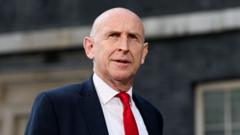
John Healey Becomes Chancellor, Faces Immediate Spending Dilemmas
New Chancellor John Healey faces immediate pressure to balance ambitious spending promises with fiscal reality after his appointment.
John Healey has been appointed as the new Chancellor, inheriting a daunting fiscal landscape and the immediate challenge of reconciling the new government's ambitious policy agenda with its financial constraints. His appointment marks a significant moment as the administration seeks to implement its core promises.
The context for Healey's appointment is the formation of a new government under Prime Minister Andy Burnham, which has signaled its intent to make a strong impact with early policy announcements. Burnham's administration is keen to address public concerns, particularly regarding the cost of living, and has pledged immediate action.
One of the first major policy proposals from the new government is a pledge to cut VAT on household electricity bills, effective from October 1. This move, alongside other significant spending plans such as a council house building program and changes to income tax thresholds, presents a substantial financial undertaking for the new Chancellor.
Healey's appointment is particularly noteworthy given his previous tenure as a Treasury minister and his recent critical remarks about the department's influence. He previously described Treasury orthodoxy as a "dead hand" and argued that defense spending should be viewed as a driver of growth, not a drain. Now, as Chancellor, he must navigate these past views against the practicalities of managing national finances.
Sources indicate that Prime Minister Burnham and Chancellor Healey share a common economic outlook, emphasizing reindustrialization and devolution. However, Healey's past statements, including a call for defense spending to reach 3% of GDP by 2030, now place the onus on him to implement fiscal strategies that can accommodate such targets.
The government's early policy ideas have been characterized as a "Christmas wish list," highlighting their ambitious nature but also the as-yet-uncalculated costs. The Prime Minister has stated that measures to provide "breathing space" for the cost of living will be announced promptly, including details on their funding.
Several high-profile ministers close to the former prime minister have been removed from cabinet positions. Notably, Shabana Mahmood and Ed Miliband, who were widely discussed as potential chancellors, did not receive the role. Rachel Reeves was reportedly offered a cabinet position but declined it.
The immediate focus for Chancellor Healey will be on how to fund the government's key pledges without jeopardizing fiscal stability. The coming days are expected to see further policy announcements and a concerted effort by the new administration to outline its vision and its financial underpinnings.
This article was written by AI based on publicly available news reporting. Original reporting by the linked source.