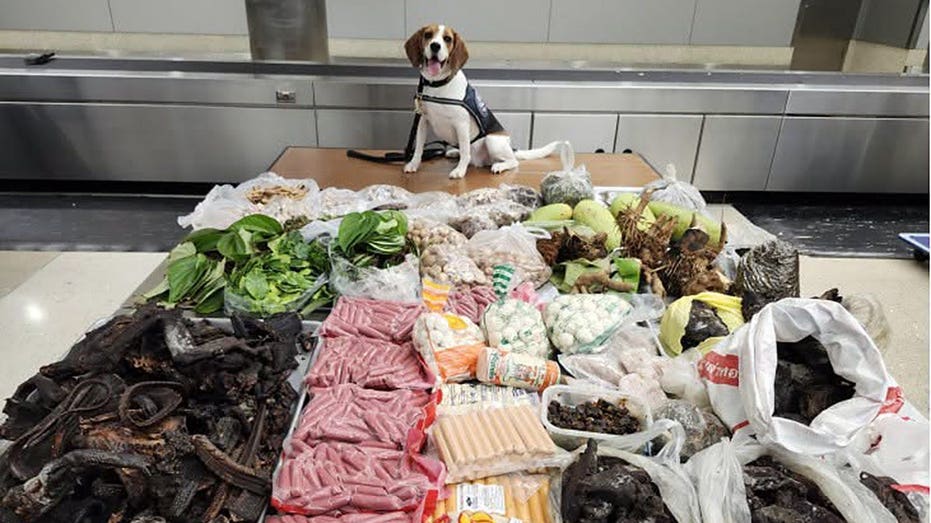
K9 sniffs out 99 lbs of prohibited meat, plants, and monitor lizard from Thailand
A U.S. Customs and Border Protection K9 detected nearly 100 pounds of prohibited items, including meat, plants, and a monitor lizard, in a traveler's luggage arriving from Thailand.
A highly trained K9 unit with U.S. Customs and Border Protection (CBP) has intercepted a significant quantity of prohibited items, including nearly 100 pounds of meat, plants, and a monitor lizard, concealed within a traveler's luggage. The discovery occurred at a port of entry as the traveler arrived from Thailand.
The detection highlights the ongoing efforts by CBP to prevent the unlawful importation of goods that could pose risks to U.S. agriculture, animal health, and human safety. These items are often prohibited due to concerns about the introduction of foreign animal diseases, plant pests, and invasive species.
The K9, known for its exceptional scent detection capabilities, alerted officers to the suspicious suitcase. Upon inspection, authorities found a large volume of undeclared food products, plant material, and the monitor lizard. The exact types of meat and plants were not immediately specified, but the presence of wildlife and animal products requires strict adherence to import regulations.
This seizure underscores the importance of international travelers declaring all goods they bring into the United States. CBP officers are trained to identify and intercept prohibited items, and their K9 partners play a crucial role in detecting these threats, often through scent alone.
Prohibited meat products can carry devastating diseases like foot-and-mouth disease or African swine fever, which could decimate U.S. livestock populations. Similarly, undeclared plants can harbor invasive insects and pathogens that threaten American crops and ecosystems. The importation of wildlife also requires specific permits and inspections to ensure animal welfare and prevent the spread of zoonotic diseases.
Travelers are strongly encouraged to declare all agricultural and animal products to CBP officers upon arrival. Failure to do so can result in the confiscation of goods, fines, and other penalties. CBP provides extensive information on its website regarding what items are permissible to bring into the U.S. and what requires declaration or is outright prohibited.
The specific disposition of the seized items, including the monitor lizard, and any penalties levied against the traveler were not detailed. However, such interceptions are routine, albeit varying in scale, as CBP continues its mission to secure U.S. borders.
CBP officers and K9s remain on the front lines, utilizing advanced technology and animal partnerships to safeguard national security and economic interests by intercepting illicit goods and contraband.
This article was written by AI based on publicly available news reporting. Original reporting by the linked source.