Kavanaugh Denies GOP Appeal, Preserving Redistricting Map for Missouri Democrats
Justice Brett Kavanaugh rejected a Republican plea to reinstate a GOP-drawn congressional map, favoring Democrats in Missouri's upcoming election.
Justice Brett Kavanaugh has denied an emergency appeal by Missouri Republicans seeking to preserve a newly drawn congressional district map that favored their party. The decision, made on September 8, 2026, means the existing map will likely remain in place for the upcoming November elections, marking a significant win for Democrats in the state.
Kavanaugh, who oversees federal courts in Missouri, did not provide an explanation for his ruling. The appeal had sought to block a lower court's decision that invalidated the Republican-drawn map, which critics argued was unconstitutionally gerrymandered to dilute minority voting strength. The rejection of the appeal by the Supreme Court justice means the previously established map, which was not drawn by the Republican legislature, will likely stand.
Republicans had argued that the existing map was problematic and that their preferred map should be used to ensure fair representation. However, the lower court found the GOP-drawn map to be unconstitutional, leading to the emergency appeal to the Supreme Court. The precise details of the existing map and the one proposed by Republicans were not elaborated upon in the source material, but the core issue revolved around partisan advantage.
This ruling has immediate implications for the balance of power in Missouri's congressional delegation. By not allowing the GOP-friendly map to be implemented, Kavanaugh's decision potentially preserves seats for Democrats and prevents the Republican party from solidifying its advantage through redistricting ahead of the critical midterm elections.
The legal battle over Missouri's congressional map has been contentious, reflecting broader national debates over redistricting practices. Gerrymandering, the manipulation of electoral district boundaries to favor one party, is a common but often controversial practice that can significantly influence election outcomes and the overall political landscape.
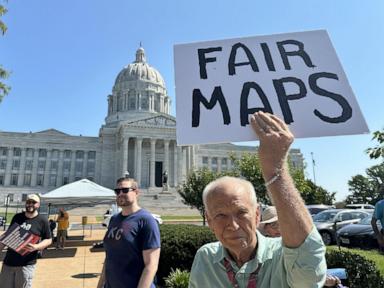
Democrats and voting rights advocates have been pushing for maps that ensure fairer representation and prevent partisan entrenchment. The source material indicates that some citizens, like Steve Perry of Kansas City, have actively protested against the Republican-backed redistricting plan, holding signs outside the state Capitol. This suggests a groundswell of public opposition to the GOP's efforts.
With Kavanaugh's denial of the emergency appeal, the focus now shifts to the upcoming November elections. The outcome of these elections in Missouri could be directly influenced by which congressional map is ultimately used. The legal maneuvering highlights the critical role of the judiciary in overseeing the redistricting process and ensuring adherence to constitutional principles.
Further legal challenges or appeals could still arise, but for now, the decision provides a degree of certainty for the upcoming election cycle in Missouri. The implications of this ruling extend beyond the state, serving as a precedent and a point of discussion in the ongoing national conversation about electoral fairness and the impact of redistricting on American democracy.
This article was written by AI based on publicly available news reporting. Original reporting by the linked source.