Kenya Confirms First Ebola Death Amid DRC Outbreak Surge
Kenya reported its first Ebola death Tuesday, a citizen who returned from the DRC, as the virus surges in the neighboring country.
Kenya has confirmed its first-ever death from the Ebola virus, the nation's health minister announced Tuesday. The case comes as the highly infectious disease continues to surge in the neighboring Democratic Republic of Congo (DRC), where the current outbreak was declared in May.
This marks the 17th Ebola outbreak recorded in the DRC. As of October 2, the country had reported 8,463 confirmed cases, resulting in 4,082 deaths, according to data from the ongoing epidemic of the Bundibugyo strain of the Ebola virus, for which no vaccine or specific treatment exists.
The deceased Kenyan national had resided in the DRC for seven years. He fell ill approximately a month prior to his return to Kenya, receiving treatment in the DRC before traveling overland to Kampala, Uganda, and then flying to Nairobi on October 3. Kenya has no prior history of Ebola cases, though neighboring Uganda registered 20 cases and two deaths, primarily among individuals who had traveled from the DRC, before being declared Ebola-free in August.
Kenyan health minister Aden Duale stated that the man was transported from Nairobi's international airport by a relative and a friend to Nairobi Hospital. Upon arrival, he was immediately isolated due to symptoms including fever, chills, intense fatigue, muscle pain, a sore throat, and bleeding at injection sites. He was subsequently screened and tested positive for the virus, passing away late Monday evening.
Health officials have identified 28 individuals who had contact with the deceased, including family members and healthcare workers. So far, only one contact has tested positive for the virus, a case that has already been reported. Authorities are actively tracing an additional 23 passengers and four crew members from the flight the deceased took.
The confirmation of Kenya's first Ebola case raises concerns about regional containment efforts, particularly given the ongoing increase in cases within the DRC. The proximity of the two nations and the travel route taken by the infected individual highlight the challenges in preventing cross-border transmission.
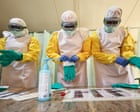
Médecins Sans Frontières (Doctors Without Borders) has been involved in Ebola emergency response training sessions in Kenya, as evidenced by recent activities in Ongata Rongai in August. These efforts underscore the preparedness measures being undertaken in the region to combat potential outbreaks.
Further details regarding the extent of contact tracing and public health measures being implemented in Kenya are expected as the situation develops. The focus remains on identifying and isolating potential cases to prevent further spread.
This article was written by AI based on publicly available news reporting. Original reporting by the linked source.