Kherson Under Daily Fire as White House Pursues Peace
Kherson faces relentless Russian attacks, killing or injuring 20 daily, even as the White House seeks peace.
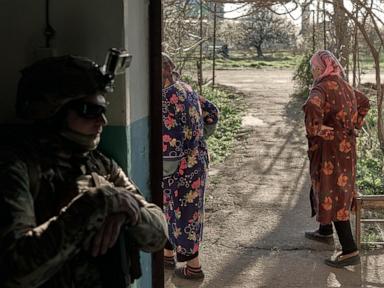
The frontline Ukrainian city of Kherson is enduring a relentless barrage of Russian attacks, with local officials reporting approximately 20 people killed or injured each day. This intensified shelling occurs as the White House engages in diplomatic efforts aimed at brokering a peace deal to end the ongoing conflict.
Kherson, situated along the Dnipro River, has become a critical frontline since Ukraine's liberation of the city in late 2022. The river now serves as the dividing line between Ukrainian and Russian forces in the southern theater. Consequently, the city faces daily assaults from artillery, drones, missiles, and air-dropped bombs launched from the Russian-occupied opposite bank.
Natalia Sergienko, a humanitarian worker and director of the Kherson Power of the South organization, described harrowing close calls in early September. She recounted an incident where a drone narrowly missed her car before being shot down, and another where she narrowly escaped a drone attack by taking cover in a basement. These experiences highlight the constant danger faced by residents and humanitarian workers in the city.
The United Nations' Independent International Commission of Inquiry on Ukraine has identified such attacks, including the use of FPV drones for targeting civilians, as constituting crimes against humanity. The phrase "human safari" has reportedly been coined in Kherson to describe these specific drone attacks, with videos of such incidents often circulated on Russian military-aligned Telegram channels.
Despite the ongoing violence in cities like Kherson, diplomatic channels are being explored. The White House has indicated discussions aimed at achieving a peace agreement, though the path to resolution remains distant. For frontline cities, the immediate reality is an open-ended war, irrespective of any potential accords reached in Moscow or Kyiv.
The Kherson region, along with Zaporizhzhia, Donetsk, and Luhansk, was claimed by Russia in September 2022 referenda, which were widely condemned as illegitimate. These regions are considered by Moscow to be integral parts of Russia, placing them at the geographic and ideological core of the Kremlin's invasion.
The civilian population of Kherson has been significantly impacted. Oleksandr Tolokonnikov, deputy head of the Kherson Regional Military Administration, stated that nearly 80% of the city's pre-war population, which was around 283,000, has departed. This exodus occurred both during the initial Russian occupation and in the period following the city's liberation.
The ongoing hostilities and the precarious frontline position of Kherson underscore the immense human cost of the conflict and the challenges that lie ahead in any peace process. The daily toll of civilian casualties serves as a stark reminder of the urgent need for a sustainable resolution.
This article was written by AI based on publicly available news reporting. Original reporting by the linked source.