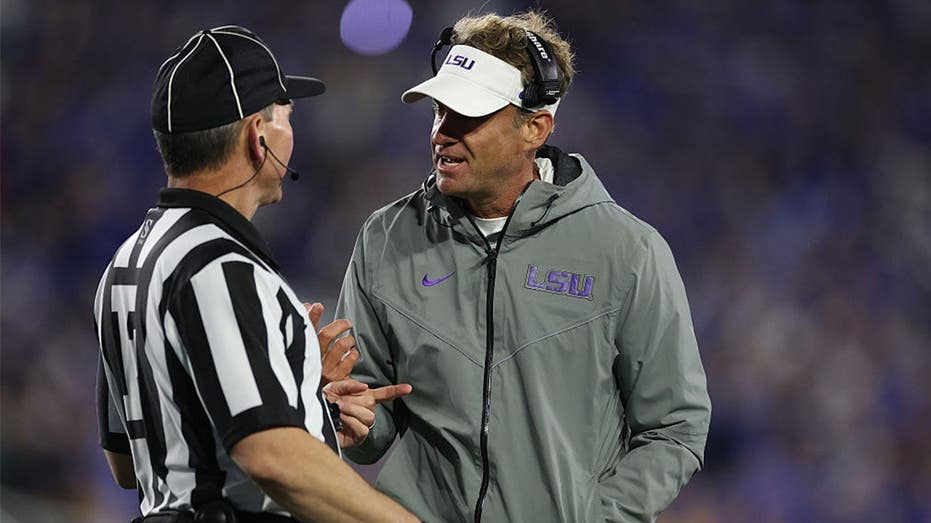
Kiffin: Ref Said He'd 'Be Killed' if Whistle Blown Before Kentucky TD
Ole Miss coach Lane Kiffin claims a referee admitted he wouldn't blow his whistle pre-touchdown due to safety fears.
Ole Miss head coach Lane Kiffin has alleged that a game official told him he feared for his safety if he had blown his whistle to stop play before a critical Kentucky touchdown. The controversial no-call occurred in the first half of the October 8th game, which ultimately saw Kentucky narrowly defeat Ole Miss 35-34.
Kiffin made the extraordinary claim on his podcast, "The Lane Kiffin Podcast," detailing an interaction he had with an official after the play. The incident in question involved a forward progress call that Kiffin and his staff believed should have stopped the play before the Wildcats scored. Instead, the whistle was not blown, and Kentucky capitalized on the continuation of the play to get into the end zone.
According to Kiffin, he approached an official after the play to understand the decision. He stated that the referee candidly admitted that had he blown the whistle to stop the play where he perceived forward progress had ceased, he believed he "would have been killed" by the players on the field. This comment suggests a perceived pressure or fear of player reaction from officials in high-stakes college football moments.
The implications of such a statement, if accurate, are significant for the officiating of college football. It raises questions about the environment in which officials are expected to make calls and whether player conduct or the intensity of the game is influencing their decisions, potentially to the detriment of fair play.
Kiffin did not explicitly name the official involved, but the context points to a moment during the game where the outcome was in question. The touchdown in question was a pivotal score for Kentucky, contributing to their eventual one-point victory. The no-call has been a subject of discussion among Ole Miss fans and analysts who felt it was a missed opportunity to halt the opponent's momentum.
While the source material does not provide an official response from the officiating crew or the SEC, the nature of Kiffin's accusation suggests a potential internal review or discussion within the league regarding officiating standards and safety concerns for referees. The claim, made on a public platform, is likely to draw attention and scrutiny.
This incident adds to the ongoing debate surrounding officiating in college football, where controversial calls frequently ignite fan and coach frustration. Kiffin's unique and candid approach to discussing such matters, even when critical of officiating, has become a hallmark of his public persona.
Further details or official statements regarding Kiffin's claims have not yet been released. The SEC typically does not comment on specific officiating calls during or immediately after games, but such a direct allegation from a prominent coach may warrant a response or clarification.
This article was written by AI based on publicly available news reporting. Original reporting by the linked source.